
Education
Navigating School and IEPs with Your ABA Provider on Your Side

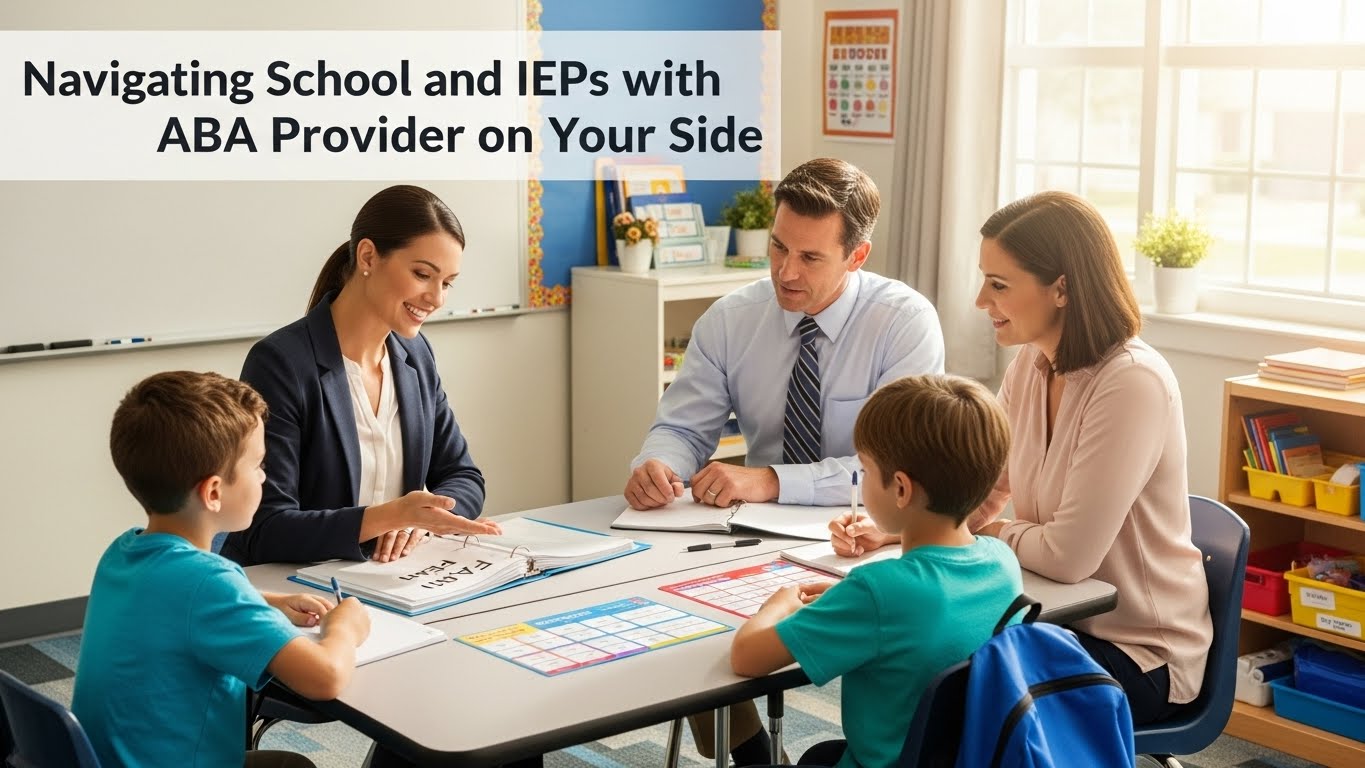
Navigating the school system can be a complex journey for children with developmental, behavioral, or learning challenges. For families who have children with individualized needs, understanding the intricacies of Individualized Education Programs (IEPs) is essential. An IEP is more than just paperwork it is a roadmap designed to ensure that a child receives the support, accommodations, and services necessary for academic and social success. While parents and teachers play a central role in this process, partnering with trained specialists can make a significant difference. Specifically, ABA professionals can provide essential guidance and support throughout the IEP process, ensuring that goals are practical, measurable, and aligned with a child’s unique strengths and challenges.
Understanding the Role of an IEP
An Individualized Education Program is a legally binding document created for students who qualify for special education services under the Individuals with Disabilities Education Act (IDEA). Its purpose is to define a personalized learning plan that addresses both academic and functional skills, allowing the child to thrive in the educational environment.
Key components of an IEP include:
- Present Levels of Academic Achievement and Functional Performance (PLAAFP): This section provides a snapshot of the child’s current abilities and challenges.
- Measurable Annual Goals: Clear objectives that the child should achieve within a year.
- Special Education and Related Services: Services provided to the child, such as speech therapy, occupational therapy, or behavior therapy.
- Accommodations and Modifications: Adjustments to instruction or the learning environment to support the child’s success.
- Progress Monitoring: How the child’s progress toward goals will be measured and reported.
While the IEP process is meant to be collaborative, it can often feel overwhelming for families who are unfamiliar with educational terminology, procedural rules, and advocacy strategies. This is where ABA professionals can offer invaluable assistance.
How ABA Professionals Enhance the IEP Process
Applied Behavior Analysis (ABA) is a well-established approach for understanding and improving behavior and learning. ABA professionals are trained to assess behavior, develop individualized interventions, and systematically monitor progress. Their expertise can be leveraged in educational settings to ensure that IEP goals are evidence-based, functional, and tailored to a child’s specific needs.
One of the most critical contributions of ABA professionals is in goal development. They help translate observed behaviors and learning challenges into measurable, achievable objectives that can be tracked over time. For example, a child who struggles with social interactions may have a goal to initiate conversations with peers a certain number of times each week. ABA professionals can identify the steps necessary to reach that goal, suggest practical teaching strategies, and provide data-driven insights that inform IEP team decisions.
In addition, ABA professionals often serve as a bridge between the school team and the family. Schools may have limited resources or varying levels of experience in behavior analysis. By participating in IEP meetings, ABA professionals ensure that the strategies recommended are both realistic for the classroom and consistent with therapeutic goals established outside school. This collaboration helps create a unified approach, preventing conflicting expectations and ensuring that the child receives cohesive support across environments.
Data-Driven Decisions in Education
A cornerstone of ABA is the use of data to guide decision-making. ABA professionals routinely collect, analyze, and interpret behavioral and educational data to assess progress and adjust interventions. This approach aligns perfectly with the IEP process, which requires measurable objectives and regular monitoring.
For instance, a child working on improving on-task behavior in the classroom may have ABA professionals track the frequency, duration, and context of off-task behaviors. This data can then be presented at IEP meetings to evaluate whether current strategies are effective or if modifications are necessary. Parents often find this approach empowering because it provides concrete evidence of progress or challenges, moving discussions beyond anecdotal observations.
Furthermore, when schools implement interventions suggested by ABA professionals, the resulting improvements in behavior and skill acquisition are often significant. Teachers may notice that the child requires fewer prompts, participates more actively in class, or demonstrates improved social interactions. These measurable outcomes not only benefit the child but also provide the IEP team with clear justification for maintaining or adjusting specific supports.
Supporting Families Through Advocacy
Navigating the IEP process can be stressful for families, particularly if they are unsure of their rights or how to advocate for their child. ABA professionals can offer guidance by explaining complex educational terminology, reviewing proposed goals, and suggesting adjustments to ensure that objectives are realistic and attainable. Their presence during IEP meetings can also boost parents’ confidence, providing professional support and credibility when discussing behavioral or learning needs.
Additionally, ABA professionals can help families understand which accommodations are most appropriate. For instance, if a child struggles with sensory sensitivities, ABA professionals may recommend structured breaks, modified seating arrangements, or specific classroom routines that reduce stress and increase engagement. By offering practical solutions backed by data, these professionals help parents make informed decisions and advocate effectively within the school system.
Integrating ABA Strategies into Daily School Routines
The benefits of ABA professionals extend beyond IEP meetings. Their interventions often include strategies that can be seamlessly integrated into daily classroom routines. Teachers may receive training on reinforcement systems, prompting techniques, and positive behavior supports designed by ABA professionals. This integration ensures that the child receives consistent guidance across environments, reinforcing learned skills and supporting generalization the ability to apply skills in multiple settings.
Moreover, ABA professionals can collaborate with other specialists listed in the IEP, such as speech therapists or occupational therapists. This multidisciplinary approach ensures that interventions complement each other rather than conflict, creating a cohesive support network for the child. By providing this level of coordination, ABA professionals help maximize the effectiveness of all services outlined in the IEP.
Monitoring Progress and Adjusting Goals
A dynamic aspect of the IEP process is the ongoing evaluation and adjustment of goals. Children grow and develop at different rates, and their educational plans should reflect these changes. ABA professionals play a critical role in this process by continuously monitoring progress and recommending modifications based on data.
For example, if a child is consistently meeting social skills objectives ahead of schedule, ABA professionals may suggest advancing the goals to maintain engagement and growth. Conversely, if a child struggles to meet a target, ABA professionals can break the goal into smaller, manageable steps, adjust reinforcement strategies, or provide additional support. This flexibility ensures that the IEP remains a living document, responsive to the child’s evolving needs.
Fostering Collaboration Between School and Home
A key factor in successful education for children with special needs is consistency between home and school. ABA professionals facilitate this collaboration by helping families understand school strategies and providing guidance on implementing similar practices at home. Consistent reinforcement of skills across environments strengthens learning and promotes independence.
For instance, if an ABA professional has implemented a communication intervention at school, they can train parents to use similar techniques at home. This consistency reinforces learning and reduces frustration for the child, who experiences familiar strategies in multiple settings. Over time, these coordinated efforts lead to improved outcomes in behavior, communication, and academic performance.
Long-Term Benefits of ABA Support in Schools
The involvement of ABA professionals in the IEP process has long-term benefits for children. By ensuring that goals are evidence-based, measurable, and functional, these professionals increase the likelihood that students will acquire meaningful skills that extend beyond the classroom. Skills such as self-regulation, social interaction, and task completion not only enhance academic success but also prepare children for greater independence in everyday life.
Furthermore, children supported by ABA-informed IEPs often experience higher levels of engagement and motivation in school. By addressing behavioral and learning challenges in a structured, data-driven way, ABA professionals create an environment in which children can thrive academically, socially, and emotionally.
Conclusion
Navigating school and IEPs can be challenging, but families do not have to face this journey alone ABA professionals provide invaluable support by ensuring that educational goals are meaningful, measurable, and achievable. Their expertise in behavior analysis, data-driven decision-making, and intervention planning empowers families, strengthens collaboration with educators, and enhances outcomes for children.
By integrating ABA strategies into daily school routines, monitoring progress, and supporting advocacy efforts, these professionals help create an educational experience that is both effective and personalized. For families navigating the complexities of IEPs, partnering with ABA professionals is not just an advantage it can be a transformative step in ensuring that children reach their full potential in school and beyond.


- The process of replacement of a lost university document directly via a registrar takes anywhere between 4 and 10 weeks.
- Official university replacements are usually $50-$150 without expedited shipping.
- When you buy the best fake diploma, you have an instant visual proof of your degree to showcase while you’re awaiting the official bureaucratic procedure.
- A proper novelty service eliminates the need for notarized request forms and lengthy administrative processing delays.
When the big career change is imminent, and you can’t find your graduation certificate, panic sets in. Many professionals think it’s easy and quick to get a replacement from their alma mater. In reality, there are a lot of problems with the registrar requirements, high administrative charges, and waiting weeks for delivery. If you understand how to properly handle these delays and when to buy fake diploma online as a temporary fix, you will save yourself a lot of stress.
The Administrative Bottleneck: Time and Expense
The biggest issue graduates have is the length of the official replacement cycle. It takes up to 10 weeks for a standard registrar’s office to process, print, and mail a new document.
Most universities will not have pre-printed copies on file. They do batch orders from third-party printing companies every month. This bureaucratic process is rarely without cost. Students are generally required to pay somewhere between $50 and $150 for the regular processing fee. Any request will be completely denied until the financial hold is removed if there is a financial hold on your student account.
Handling Strict Documentation Requirements
You can’t just send an email to your old college and request that they send you a new degree. Institutions require identity verification, and it has to be very strict. They often need to be notarized, request forms, government IDs, and certain student identification numbers.
One of the things we see in our day-to-day business when we get requests to replace a student ID is that 65% of professionals can’t recall their student ID number from decades ago. Collecting these required documents can be a hassle, especially if the original school is no longer in operation or has been consolidated with another school. When confronted with these obstacles, opting to buy fake diploma online is a quick, easy, and immediate solution that can be displayed until all of the official paperwork is taken care of.
The Lack of Customization in Official Reprints
A replacement is issued at a later date by a university and does not always look the same as your original. Over the years, the branding of schools has been updated, administrative signatures have changed, and school seals have been changed.
Official replacements are printed in the current administrative format. This translates to a 1995 degree with the signatures of the university president for 2026. The official way will not suit you if you want to keep the same look that you had when you graduated. This is solved by using the best fake diploma services, as graphic designers can design the specific vintage layout, fonts, and signature styles relevant to the year of your graduation.
Conclusion
Having your graduation certificate lost is a disruption in the celebration of your hard-earned achievements. The only way to obtain a certified legal record is through official university channels, which can be time-consuming and costly. It’s not necessary to leave your home office walls empty for months.
If you’re in need of the best fake diploma around, with quick turnaround times, then turn to the expert design team at Diploma Makers to bring back the memories of your academic years, sans the waiting.
FAQs
How long does a university take to replace a lost diploma?
The normal replacement process takes between 4 and 10 weeks, depending on the printing schedule of the institution. Typically, universities place monthly replacement orders; they do not print them on demand.
Why do universities charge so much for replacement degrees?
The $50 to $150 fee is for administrative work to verify your identity, check your finances, and pay the specialized third-party printing business. There will be additional expenses that will be charged to the final bill for expedited shipping.
Can I get a replacement if my school is closed down?
Yes, but it will take a lot of research. Usually requires reaching out to the department of education in the state where the closed school was located or the individual school district that took over the administrative records of the school.
Are novelty replacement diplomas legal to purchase?
Yes, it is perfectly legal to buy a custom graphic reproduction for novelty, theatrical props, or personal display. It is not illegal unless you are trying to defraud the employer or falsely represent possession of academic degrees.

Understanding the Challenges of Math-Intensive Teacher Preparation
Enrolling in a math-intensive teacher preparation program is a commitment to professional growth and a personal journey toward mastery. These programs are designed to provide aspiring educators with a profound understanding of mathematical principles and best practices for effective classroom instruction. At the same time, students will face the realities of challenging coursework and demanding standards that test both their knowledge and endurance early on. Exploring a math secondary education pathway can put you on the right track, but it is essential to go in with your eyes open to the challenges and rewards that come with intensive math preparation.
The complex nature of mathematics as a discipline requires not just understanding the content, but finding ways to communicate it to young learners with diverse needs. Many candidates struggle to manage the breadth and depth of the topics covered, especially when balancing student teaching, coursework, and personal obligations. Recognizing these challenges is the first step toward developing strategies that foster confidence and academic success.
Developing a Strong Mathematical Foundation
Building a solid grasp of mathematical concepts is a non-negotiable starting point. Recent research highlights a pressing concern: a report from the National Council on Teacher Quality found that only 1 in 8 elementary teacher preparation programs effectively deliver essential mathematics content. The disparity in program quality can create knowledge gaps, making it critical for candidates to supplement coursework with self-directed learning and peer collaboration. Strengthening your foundation by revisiting algebra, geometry, statistics, and calculus will pay dividends, not only in program performance but also in future classroom effectiveness. For educators, deep content knowledge is the foundation for helping students overcome math anxiety and achieve their own success.
Proactively seeking out additional resources, such as online tutorials, math workshops, and tutoring opportunities, can help close any content knowledge gaps left by traditional courses. Regular self-assessment and honest reflection on areas for improvement are important so that candidates can remediate weaknesses before they interfere with later coursework or teaching assignments. Preparation programs that foster growth mindsets empower future teachers to become self-motivated learners, well-equipped to navigate evolving math standards and challenge themselves to keep growing.
Effective Time Management Strategies
Succeeding in a math-intensive program goes hand in hand with mastering time management. Students often juggle demanding schedules filled with instructional hours, study groups, assignments, and field experiences. A structured approach to managing time is essential for staying on top of competing priorities. Start by creating a semester-long calendar of major deadlines, then work backward to allocate daily and weekly tasks.
Setting realistic goals and using task-prioritization methods such as the Eisenhower Matrix or the Pomodoro Technique can help prevent last-minute stress and burnout. Leveraging digital tools, such as calendar apps and reminder systems, supports accountability and prevents tasks from being overlooked. Keeping a balanced schedule also allows for crucial downtime, which supports sustained focus and mental health.
Utilizing Support Systems
The journey through a teacher preparation program becomes much more manageable with the right support systems. Participating in study groups provides opportunities for collaborative learning and problem-solving. Connecting with faculty mentors can offer personalized advice on coursework and career choices. Many universities also provide access to learning centers, tutoring services, and mental health resources designed to help students overcome academic and emotional challenges. Reaching out for support, rather than struggling in silence, builds a culture of resilience and community.
Navigating challenging courses is much easier in a strong network. Interacting with peers who share your passion for mathematics fosters an environment conducive to sharing ideas, tackling difficult assignments together, and celebrating milestones. Mentorship from experienced educators provides wisdom and can open doors for future job opportunities and ongoing professional development.
Incorporating Technology and Innovative Teaching Methods
As the educational landscape evolves, technology plays a pivotal role in both learning and instruction. Research highlights that integrating AI-generated hints and supplemental assignments can greatly enhance understanding, particularly for underrepresented groups in math education. Exploring math software, online assessment tools, and interactive teaching platforms can improve both your learning and how you reach your future students. Additionally, using digital platforms for collaboration and resource sharing enables candidates to expand their networks and access high-quality instructional materials.
Innovative methods such as flipped classrooms, inquiry-based learning, and real-world problem-solving can foster deeper student engagement. Embracing these approaches as a student in a preparation program will help you model dynamic, student-centered instruction once you are leading your own classroom.
Engaging in Continuous Professional Development
Lifelong learning is an expectation in education. Developing your skill set through workshops, webinars, and participation in professional learning communities keeps your practices and knowledge current. Teacher preparation programs often provide access to guest lectures and conferences, but it is also important to seek out independent professional development opportunities.
Keeping up to date with the latest research ensures that your teaching methods remain evidence-based and impactful. It also demonstrates commitment to the field and a willingness to adapt quickly to new curriculum standards and pedagogical shifts. Actively participating in professional organizations, such as the National Council of Teachers of Mathematics, helps you stay engaged and connected to trends and policy updates.
Building Resilience and Adaptability
Tackling the inevitable setbacks that come with rigorous programs requires a high level of resilience and adaptability. A growth mindset, believing that intelligence and ability can be developed, is essential for both personal well-being and modeling productive attitudes for your future students. Learning from mistakes, reflecting on feedback, and remaining open to constructive criticism all contribute to emotional and academic growth.
Remember that adaptability is equally valuable. As programs evolve and classroom environments shift, being able to pivot and embrace change will prepare you for a long and fulfilling teaching career. Finding constructive ways to manage stress, such as maintaining hobbies, exercising regularly, or connecting with family and friends, ensures that challenges do not derail your progress.
Final Thoughts
Thriving in a math-intensive teacher preparation program is a multifaceted endeavor. Success depends on establishing a strong mathematics foundation, practicing consistent time management, utilizing robust support systems, integrating technology and innovative methods, embracing professional development, and fostering resilience. Candidates who commit to these strategies will not only navigate the demands of their training but will also emerge prepared to empower and inspire the next generation of math learners.

The 8.3 independent practice page 221 answer key plays a crucial role in helping students evaluate their understanding of academic concepts and strengthen their problem-solving abilities. Many learners rely on structured exercises within textbooks to practice newly learned topics, but without a clear explanation or reference solution, it can sometimes be difficult to determine whether their answers are correct. This is where a reliable answer key becomes valuable because it allows students to compare their work and identify mistakes that may need correction.
In modern education, study resources such as answer keys are not simply tools for checking results; they are also learning guides that help learners grasp the reasoning behind each solution. When students review their answers with the 8.3 independent, they gain insight into correct procedures and develop stronger analytical thinking skills. This process encourages independent learning and builds confidence, which ultimately leads to more productive study sessions and improved academic performance.
Understanding the Purpose of 8.3 Independent Practice Page 221 Answer Key
The 8.3 independent practice page 221 answer key is designed to help students verify their solutions and deepen their comprehension of lesson content. In many educational textbooks, independent practice sections provide exercises that reinforce concepts taught in class. These exercises encourage students to apply their knowledge independently before reviewing the correct answers. When learners check their responses with the answer key, they can quickly determine whether their reasoning aligns with the intended solution.
Another important purpose of the 8.3 independent is to support self-assessment. By comparing answers and reviewing explanations, students can identify areas where they need further practice. This reflection allows them to focus their efforts on challenging topics instead of repeating concepts they already understand. Over time, this approach improves study efficiency and helps learners become more self-directed in their educational journey.
How the 8.3 Independent Practice Page 221 Answer Key Improves Learning
The 8.3 independent practice page 221 answer key improves learning by providing immediate feedback on completed exercises. Feedback is one of the most important components of effective education because it helps students recognize errors and correct misunderstandings. When learners receive quick confirmation about whether their answers are correct, they can adjust their thinking and avoid repeating the same mistakes in future assignments.
Furthermore, reviewing the 8.3 independent encourages critical thinking. Instead of simply memorizing answers, students analyze the steps used to reach a solution. This deeper engagement with the material promotes long-term retention of knowledge. As learners repeatedly practice and review their work, they gradually develop stronger reasoning abilities and a more confident approach to tackling academic challenges.
Study Strategies Using the 8.3 Independent Practice Page 221 Answer Key
Students can significantly improve their study habits by using the 8.3 independent practice page 221 answer key strategically. One effective approach is to complete all exercises independently before checking any solutions. This ensures that learners genuinely test their understanding rather than relying on the answer key too early. After finishing the questions, students can compare their results and identify where their reasoning differed from the correct approach.
Another strategy involves reviewing incorrect answers carefully and attempting the problems again. The 8.3 independent practice should serve as a learning guide rather than a shortcut. By studying the explanation and then reworking the problem without assistance, students reinforce the concept and strengthen their problem-solving skills. This method transforms the answer key into a powerful educational resource rather than a simple list of solutions.
Common Challenges Students Face While Solving Practice Exercises
Many learners encounter difficulties when working through independent practice activities, especially when they are studying complex concepts for the first time. Even when instructions appear straightforward, applying the correct method can sometimes be confusing. This is why resources like the 8.3 independent practice page 221 answer key are so valuable, as they provide clarity and reassurance for students who want to confirm their progress.
Another challenge involves misunderstanding the reasoning behind a correct answer. Some students focus only on the final result rather than the process used to reach it. When reviewing the 8.3 independent practice, it is important to analyze each step carefully. Doing so helps learners recognize patterns, improve accuracy, and develop a deeper understanding of the subject matter.
Example Learning Progress Table
The following table demonstrates how students might track their progress while using the 8.3 independent practice page 221 answer key during study sessions.
| Study Step | Student Action | Learning Outcome |
|---|---|---|
| Step 1 | Complete exercises independently | Tests understanding of concepts |
| Step 2 | Compare responses with answer key | Identifies correct and incorrect answers |
| Step 3 | Review explanation for mistakes | Improves conceptual clarity |
| Step 4 | Attempt similar problems again | Reinforces knowledge |
| Step 5 | Evaluate improvement | Builds confidence in learning |
Tracking progress in this structured way helps learners see how the 8.3 independent answer key contributes to better academic performance. By reviewing mistakes and reworking problems, students transform simple practice exercises into meaningful learning experiences.
Role of Teachers in Guiding Students With Answer Keys
Teachers play an important role in helping students use resources like the 8.3 independent practice page 221 answer key effectively. Instead of encouraging learners to simply copy answers, educators emphasize the importance of understanding the reasoning behind each solution. When teachers guide students through the logic of a problem, learners develop a deeper appreciation for the subject and gain confidence in their abilities.
Classroom discussions can also enhance the value of the 8.3 independent practice. When students compare different approaches to solving a problem, they discover that there may be multiple ways to reach the correct answer. This collaborative learning environment promotes critical thinking and encourages students to share ideas, ultimately strengthening their understanding of the material.
Benefits of Independent Practice in Education
Independent practice is a cornerstone of effective education because it allows students to apply knowledge without immediate guidance. Exercises connected to the 8.3 independent practice page 221 answer key provide an opportunity for learners to test their comprehension and develop confidence in their skills. When students complete tasks independently, they become more responsible for their own learning progress.
Another advantage of independent practice is that it prepares students for real academic assessments. Exams and quizzes often require learners to solve problems without assistance, so practicing in a similar environment helps them build the necessary skills. By reviewing solutions through the practice page 221 answer key, students ensure they are on the right track while still benefiting from the challenge of independent work.
Sample Practice Review Table
Students often benefit from organizing their practice results in a simple review table when studying with the 8.3 independent practice.
| Question Number | Student Answer | Correct Answer | Revision Needed |
|---|---|---|---|
| 1 | Correct | Correct | No |
| 2 | Incorrect | Correct | Yes |
| 3 | Correct | Correct | No |
| 4 | Incorrect | Correct | Yes |
| 5 | Correct | Correct | No |
Using a table like this encourages learners to reflect on their progress and determine which concepts require additional practice. Over time, this habit builds stronger study discipline and helps students maintain consistent improvement in their academic work.
Building Confidence Through Practice and Review
Confidence is an important factor in academic success, and tools like the 8.3 independent practice page 221 answer key help students develop that confidence gradually. When learners see that their answers match the correct solutions, they feel reassured about their understanding of the topic. This positive reinforcement motivates them to continue studying and tackling more challenging exercises.
Even when answers are incorrect, the 8.3 independent practice provides valuable insight into how mistakes occur. By analyzing these errors and correcting them, students transform setbacks into learning opportunities. Over time, this approach builds resilience and encourages learners to approach future assignments with greater determination and focus.
Conclusion
The 8.3 independent practice page 221 answer key serves as an essential learning resource for students who want to strengthen their understanding of academic concepts and improve their study habits. By allowing learners to verify their answers and review problem-solving methods, the answer key transforms simple exercises into meaningful educational experiences. This process encourages deeper comprehension, independent thinking, and consistent academic growth.
Ultimately, effective use of the 8.3 independent practice empowers students to take control of their learning journey. When combined with thoughtful study strategies, reflective practice, and guidance from educators, it becomes a powerful tool that enhances study sessions and supports long-term academic success.
-

 Blog5 months ago
Simpcit6: Redefining Simplicity in a Complex World
-

 Blog10 months ago
Baddi Hub: An Emerging Industrial and Business Hotspot
-

 food10 months ago
Calamariere: How to Perfectly Prepare at Home
-

 Technology10 months ago
YourAssistantLive com: The Future of Smart Digital Assistance
-

 Health9 months ago
Nerovet AI Dentistry: Enhancing Patient Experience and Treatment Outcomes Dental Care
-

 Technology5 months ago
Voomixi com: The Digital Platform Redefining Online Interaction
-

 Business7 months ago
Top Benefits of Using Quality Wire Rope Lube in US Heavy Industry
-

 Technology9 months ago
Anonibs: The Trending Anonymous Image Board Platform