
Business
How to Spot a Reliable Estate Agent: A West Wickham Property Guide

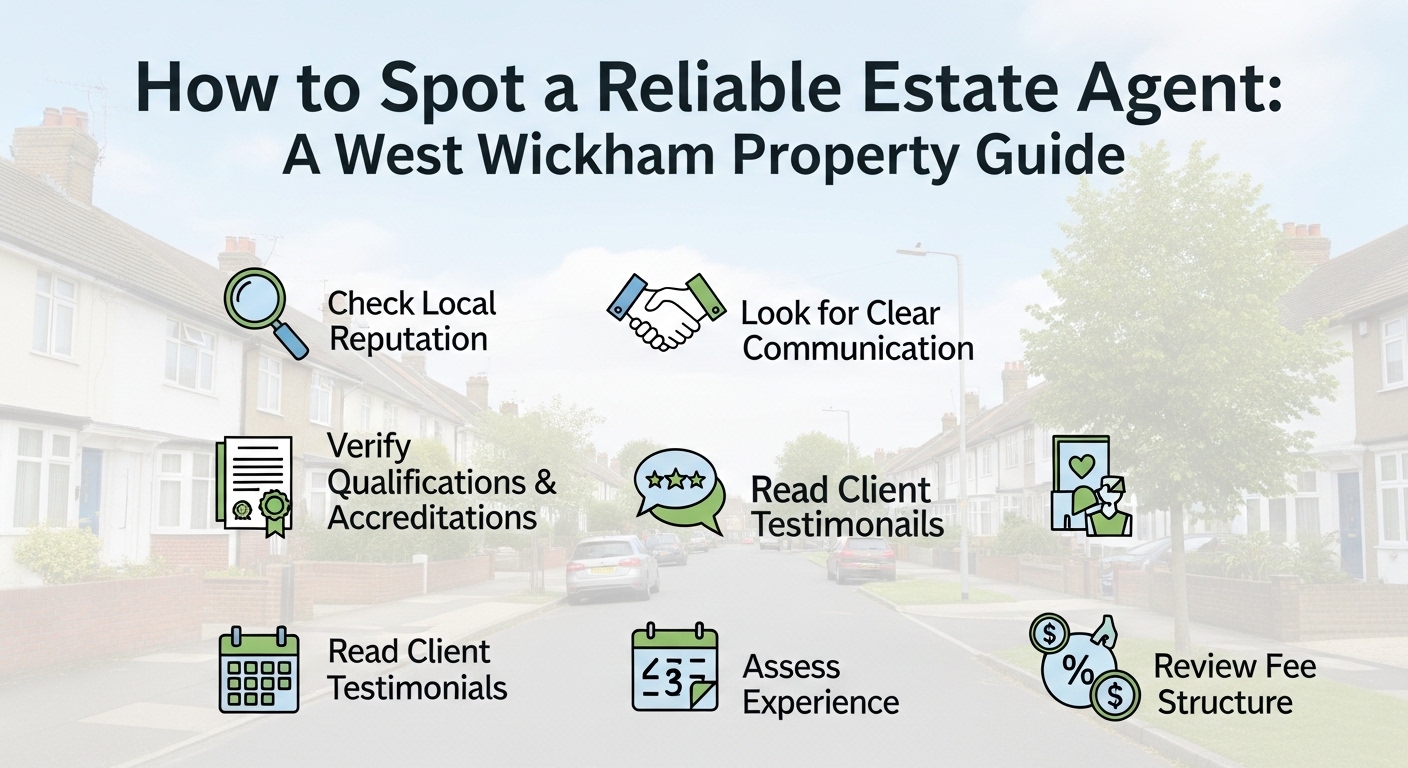
Choosing the right partner for your property journey is perhaps the most critical decision you will make in the moving process. It is easy to get swept up in promises of high valuations or fast sales, but the reality of the property market requires a steady, transparent hand. A truly competent professional does more than just list your home on a portal; they manage expectations, navigate complex negotiations, and safeguard your interests from start to finish. When looking for the right support, you should discover reliable estate agents in West Wickham who can offer the deep local knowledge and proven track record necessary to achieve the best outcome. In this guide, we will break down the essential qualities of trustworthy agents, helping you filter out the noise and focus on what genuinely matters for a successful, stress-free move.
Understanding the Value of Local Expertise
A common misconception in property is that all agents operate in the same way, regardless of the area. In reality, real estate is hyper-local. A reliable agent is not just someone with a desk in a high-street office; they are someone who understands the nuanced rhythm of the neighbourhood. They know which roads are in demand, which schools are currently the biggest driver for family moves, and how the local transport links impact property values.
When you speak with an agent, look for evidence of this specific, ground-level intelligence. Can they talk about recent sales in your immediate vicinity, rather than just general market data for the wider borough? A good agent will explain the ‘why’ behind the pricing. They will show you how a property’s features—whether it’s a specific period detail or a rare garden size—have translated into value for previous sellers.
Furthermore, local expertise extends to their network. A long-standing agency often has a database of active, serious buyers who are already looking in West Wickham. They don’t just wait for the phone to ring; they actively connect the right property with the right buyer. This proactive approach is the hallmark of reliability. If an agent seems to rely solely on automated uploads and generic marketing, they may not be providing the high-touch service you deserve.
Communication and Transparency as Your Benchmark
The property market is rarely a smooth ride. Whether it is a survey coming back with unexpected concerns or a chain reaction where a buyer suddenly decides to renegotiate, challenges will arise. The true test of reliability is how your agent behaves when things go wrong, not when everything is going perfectly.
A reliable agent prioritises transparency over convenience. They will be honest about the challenges they foresee and will communicate them clearly before they spiral. Look for an agent who is proactive in their updates. Do you have to chase them for information, or are they already calling you with an update before you even think to ask? If you find yourself in the dark, wondering where you stand in the process, your agent is failing the most basic requirement of the role.
Transparency also applies to the financial side. A professional agent should be willing to explain their commission structure and marketing costs without hesitation. Be wary of anyone who promises a significantly higher valuation than others without substantial, evidence-based reasoning; they may simply be ‘buying’ your instruction to secure the listing, knowing they will pressure you to drop the price later. A reliable agent is confident enough to tell you the truth, even when it isn’t what you necessarily want to hear.
Assessing Proven Track Records and Professionalism
While marketing materials and flashy websites can be persuasive, the best predictor of future performance is past delivery. Don’t be afraid to ask for specifics. A reliable agent will be happy to point you toward their recent successes, not just general ‘about us’ copy.
Professionalism is also reflected in their memberships and standards. Are they part of a recognised professional body? These organisations mandate a code of conduct and hold their members to high standards of practice. This provides an extra layer of security for you as a client. Furthermore, look at their client testimonials. Are they written in a way that feels generic, or do they recount specific instances where the agent went above and beyond? Genuine feedback often highlights the personal touch—how an agent smoothed out a difficult negotiation or kept a fragile chain together during a period of uncertainty.
Finally, consider the agency’s approach to technology. A reliable agent uses modern tools to enhance their service, not to replace the human element. They should offer high-quality photography and floorplans as standard, but they should also leverage digital platforms to ensure your property reaches the widest, most qualified audience. Technology should be a tool that empowers their local expertise, not a mask for a lack of it.
Conclusion
Navigating the West Wickham property market is rarely simple, but it becomes infinitely more manageable when you have the right partner by your side. A reliable estate agent acts as your advisor, your negotiator, and your advocate throughout the highs and lows of the moving process. By focusing on deep local intelligence, transparent communication, and a proven, professional track record, you can filter out the options that offer empty promises and find a professional who is genuinely invested in your success. Take your time during the selection process—meet several teams, ask tough questions, and trust your instincts regarding their professionalism. Your move is one of the most significant events you will undertake, and you deserve a partner who respects the weight of that decision. With the right support in place, you can approach your move with confidence, knowing you have the best possible team behind you.

Property investment in a market town like Bury St Edmunds isn’t just about the bricks and mortar; it’s about understanding the specific rhythm of a place that values heritage as much as modern convenience. Most landlords focus on the monthly rent hitting their bank account, but real profit—the kind that builds a sustainable portfolio—lives in the margins. You might find your yields are sitting lower than they should be, not because the market is soft, but because the property isn’t speaking to what locals actually want. If you’re looking to bridge that gap, you can Find letting agents in Bury st Edmunds who live and breathe the Suffolk market to give you a genuine baseline. It is often the small, almost invisible adjustments that turn a standard rental into a high-performer. We’re talking about more than just a lick of paint; it’s about positioning your asset to survive shifts in demand while keeping your overheads lean.
Understanding the Local Nuance
Bury St Edmunds has a unique pull. It is a mix of historical prestige and modern employment hubs. Think about the proximity to the West Suffolk Hospital, the Greene King brewery, or the commuters heading into Cambridge or London. That diversity of tenants is a safety net, but it also means you can’t use a “one size fits all” approach. A one-bedroom flat near the Abbey Gardens attracts a very different person than a four-bedroom family home in Moreton Hall. If you’re chasing yield, you have to look at the “void period” as your biggest enemy. A property sitting empty for three weeks because it was priced £50 too high wipes out any gain you thought you were making. Real experts know that a slightly lower rent with a long-term, reliable tenant often produces a better annual yield than a high rent with high turnover. In Suffolk, people stay where they feel settled. If you can provide that sense of “home” rather than just “housing,” you’ve already won half the battle.
The “Grid” area, with its Victorian terraces, offers a different challenge compared to the newer estates. On the Grid, you’re selling the lifestyle—the ability to walk to the pubs and shops in five minutes. Here, your yield depends on how well you’ve maintained those period features. People pay for the sash windows and the high ceilings, but they expect the plumbing and heating to work like they’re in a new build. Meanwhile, out in Moreton Hall or the newer developments, tenants prioritises parking and open-plan living. If you try to force a “Grid” price on an estate house without the same walkability, your yield will suffer. You have to match the property to the micro-location’s specific strengths.
The Refurbishment Trap
There is a common mistake: spending £20,000 on a kitchen thinking it will add £200 to the rent. It rarely does. Yield is a mathematical game. You want the highest impact for the lowest spend. In a place like Bury, where character is king, preserving original features often does more for your rent than a sleek, modern kitchen that will look dated in five years. What matters is what people can’t see. The EPC rating is no longer just a piece of paper you file away; it’s a decision-maker. With energy costs being a primary concern, a property that is draughty and expensive to heat is a hard sell. Improving insulation, upgrading a boiler, or even just ensuring the windows are properly sealed can justify a higher rent because the tenant’s total “cost of living” stays manageable.
Look at the bathrooms too. A tenant might forgive a slightly dated kitchen if the bathroom is immaculate. High-pressure showers and clean, modern tiling are non-negotiable for the professional demographic. If you are struggling to move a property, don’t just drop the rent. Look at the flooring. Worn carpets make a whole house feel tired. Replacing them with high-quality laminate or fresh, neutral carpets can transform the “smell” and “feel” of the home instantly. These aren’t just costs; they are investments in the speed of let. Every day a house sits empty is a direct hit to your yield that you can never get back.
Compliance and the Human Element
Then there’s the management side of the coin. A lot of landlords try to DIY everything to save the management fee, but they end up losing more through missed opportunities or legal slip-ups. Compliance is a minefield. Between EICRs, Gas Safety checks, and the ever-shifting landscape of rental legislation, one mistake can result in a fine that eclipses an entire year’s profit. Managing a property is also about managing a human relationship. If a tenant reports a leak and it takes two weeks to fix, that tenant is already looking at Rightmove. The cost of finding a new tenant—the referencing, the cleaning, the re-advertising—is the quickest way to kill your yield.
Professional management isn’t just about collecting rent; it’s about being the buffer that keeps the machine running smoothly. It is the preventative maintenance, the quick response times, and the ability to spot a problem before it becomes a catastrophe. If you treat your tenants well, they treat the property well. A tenant who feels respected is more likely to accept a modest rent increase in line with the market because they don’t want the hassle of moving away from a good landlord. In a market town where word of mouth travels fast, being a “good” landlord is actually a savvy business strategy. It reduces your long-term maintenance costs and ensures your income remains as predictable as possible.
Conclusion
Getting the most out of a Bury St Edmunds property requires a shift in perspective. It isn’t just about the top-line income; it’s about the durability of the asset and the efficiency of the operation. By understanding who is looking for a home in Suffolk and what they are willing to pay for, you can tailor your approach to minimise costs and maximise consistency. Whether that means a strategic upgrade to the heating system or simply choosing a more reliable management partner, the goal is always the same: a steady, predictable return. The market here is resilient, but your yields only reflect the effort and local knowledge you pour into them. Focus on the long game, keep your tenants happy, and the numbers will usually take care of themselves.

Managing receipts has long been one of the most tedious and time-consuming tasks for individuals and businesses alike. Whether you’re tracking expenses, preparing for tax season, or organizing financial records, dealing with stacks of paper receipts can quickly become overwhelming. Fortunately, modern technology has introduced smarter solutions designed specifically for this challenge. Tools like the ix1600 receipt edition scanner are transforming how receipts are captured, stored, and managed—making the entire process faster, easier, and more accurate.
Unlike traditional scanners that treat receipts like standard documents, receipt-focused scanners are built to handle small, varied paper sizes with precision. They streamline workflows by automatically organizing and digitizing receipts, helping users eliminate clutter while maintaining accurate financial records.
Touch-Screen Scanning
One of the standout features of modern receipt scanners is the integration of intuitive touch-screen controls. Instead of navigating complex software on a separate device, users can initiate scans, select destinations, and manage settings directly from the scanner itself. This simplifies the entire process, making it accessible even for those who may not be tech-savvy.
Touch-screen functionality also enhances speed and efficiency. With just a few taps, users can send scanned receipts to cloud storage, email, or accounting platforms. This eliminates the need for manual file transfers and reduces the time spent on administrative tasks.
When combined with solutions like secure cloud capture software, touch-screen scanning becomes even more powerful. Documents can be captured, processed, and securely stored in the cloud in real time, ensuring that important financial data is always accessible and protected. This integration supports a seamless workflow that keeps information organized and easy to retrieve whenever needed.
Additionally, cloud-based systems allow for better collaboration. Teams can access and manage shared documents without being tied to a specific location, making it easier to coordinate tasks and maintain consistency across workflows.
Great For Individuals & Teams
Receipt scanners are not just for large organizations—they offer significant benefits for individuals, small businesses, and teams alike. For individuals, these devices simplify personal finance management by keeping all receipts in one digital location. This makes it easier to track expenses, prepare tax documents, and maintain organized records without the hassle of paper clutter.
For teams and businesses, the advantages are even greater. Receipt scanners help standardize workflows, ensuring that all documents are captured and stored consistently. This reduces the risk of lost or misplaced receipts and improves overall efficiency. Employees can quickly scan and upload receipts, allowing finance teams to process expenses faster and more accurately.
In high-volume environments, integrating a receipt scanner with a high volume document scanner can further enhance productivity. While receipt scanners handle smaller, specialized documents, high-volume scanners manage larger batches of paperwork, creating a comprehensive document management system that supports a wide range of needs.
This combination of tools ensures that organizations can handle both everyday tasks and larger-scale document processing with ease. The result is a more streamlined workflow that saves time, reduces errors, and improves overall organization.
A Smarter Way to Stay Organized
Ultimately, the introduction of dedicated receipt scanners represents a major step forward in document management. By combining touch-screen simplicity, cloud integration, and specialized functionality, these devices make it easier than ever to stay organized and efficient.
Whether you’re an individual looking to simplify your finances or a business aiming to improve workflow efficiency, investing in the right scanning technology can have a lasting impact. With tools designed specifically for receipts, you can finally move beyond paper clutter and embrace a smarter, more streamlined way of managing your documents.


The production industry is coming into a brand new generation in which virtual technologies are reshaping how initiatives are planned, controlled, and monitored. One of the most promising innovations is edge computing, a generation that records data in the direction of the source as opposed to depending entirely on centralized cloud systems. This approach allows quicker evaluation of construction facts and helps real-time decision-making on activity websites. As production projects become increasingly complex, real-time economic visibility has emerged as critical for keeping mission budgets and preventing value overruns.
By integrating side computing with Construction Estimating Services, corporations can gain instantaneous insights into task fees and improve financial management throughout every level of construction.
Traditionally, project value monitoring depended on delayed reporting methods in which economic information was turned into accrued, processed, and analyzed after long gaps. These delays occasionally made it hard for mission managers to respond quickly to financial fluctuations or surprising fees. Edge computing changes this method by reading records at once at the development site using connected devices and sensors. This real-time fact processing permits contractors to track cloth usage, hard work productivity, and device overall performance right away. As a result, assignment teams can come across monetary versions early and make proactive modifications that keep tasks within price range.
Understanding Edge Computing in Construction
Edge computing refers to a decentralized computing technique in which statistical processing occurs in the vicinity where information is generated. Instead of sending all facts to distant cloud servers, facet devices consisting of sensors, clever cameras, and on-site processing gadgets analyze statistics locally.
In production environments, those devices accumulate information associated with system utilization, worker pastime, environmental situations, and fabric deliveries. By processing these records without delay, some computing structures provide real-time insights into the task’s overall performance and pricing conduct.
For instance, clever sensors attached to heavy machinery can tune gas intake and operational hours. If a device operates longer than planned, the machine can now flag potential increases in system costs. This immediate feedback permits challenge managers to modify work schedules or useful resource allocation earlier than the extra expense extensively affects the overall assignment price range.
Another benefit of area computing is improved information reliability. Because records are processed regionally, production websites with restricted network connectivity can still examine critical data without depending entirely on remote servers.
Real-Time Cost Visibility Through Smart Data
One of the most extensive blessings of facet computing is the potential to offer real-time visibility into challenge charges. Construction projects contain many dynamic elements such as material deliveries, hard work hours, and equipment usage. Tracking these elements continuously allows mission managers to maintain better control over monetary performance.
Imagine a commercial production venture with an envisioned fabric budget of $four million. Edge-enabled sensors related to inventory structures can track the exact quantities of substances arriving at the web page and compare them with planned estimates. If material usage starts off evolving to exceed expectations by even three to four percent, the machine can notify project managers right away.
This early detection enables preventing predominant financial overruns. Instead of coming across discrepancies weeks later, project teams can inspect troubles immediately and enforce corrective actions. Such proactive monitoring appreciably improves financial stability and reduces the danger of unexpected challenge costs.
Edge computing also helps predictive insights via studying styles in real-time records. For instance, if labor productivity declines during certain shifts, the device can discover the pattern and suggest modifications that improve efficiency and control exertion expenses.
Integrating Digital Design Data for Cost Tracking
Accurate layout information is a vital element of powerful cost tracking. Construction tasks depend heavily on digital drawings and models that define the structure, materials, and format of a construction. When those layout datasets are related to part computing structures, they could provide even deeper insights into project expenses.
Many structural and engineering companies make use of CAD Drafting Services to produce certain virtual drawings that constitute every element of a construction assignment. These drawings include specific measurements and structural statistics that can be used to calculate fabric quantities and creation requirements.
When CAD drawings are connected with edge-based tracking systems, task teams can examine actual fabric usage with planned quantities in real time. For instance, if a digital drawing specifies a certain extent of concrete for a foundation, aspect gadgets tracking concrete deliveries can immediately identify whether or not the utilization aligns with the design estimates.
This integration ensures that value monitoring remains closely linked to the design purpose. If discrepancies arise, task teams can fast decide whether or not the issue stems from layout changes, production errors, or material wastage. Such transparency strengthens each price management and assignment duty.
Enhancing Efficiency with On-Site Data Processing
Edge computing gives some other major advantages, such as faster record processing directly on the development web page. Traditional cloud-based structures from time to time experience delays due to the fact that data needs to travel through multiple networks before analysis occurs. Edge computing removes a great deal of this overhead by studying information locally.
For instance, sensors mounted on production gadgets cannot calculate working prices based on usage time, gasoline consumption, and upkeep necessities. If a particular system operates beyond its scheduled hours, the system can instantly notify the undertaking control group.
Consider a scenario where heavy system usage will increase with the aid of 10% in the course of the essential production segment. Without real-time monitoring, this boom would possibly go unnoticed till weekly price reports are reviewed. However, with aspect computing, managers get hold of on-the-spot alerts and may look at the motive straight away.
On-page processing also helps provide higher protection and performance. Cameras ready with AI abilities can display worker pastime and discover capability delays or protection hazards that may circuitously effect undertaking fees. By addressing those troubles early, production teams can improve productivity and reduce financial risks.
The Role of Industry Professionals in Data Interpretation
While aspect computing offers effective automation and analytics abilities, human know-how stays a vital part of the construction value tracking process. Experienced Construction estimators play a crucial position in interpreting the data generated by those advanced structures and ensuring that cost insights align with practical production realities.
Technology can pick out trends and provide signals, but professionals are expected to research the underlying reasons and determine appropriate answers. For instance, an area computing device might stumble upon elevated fabric usage in a specific section of construction. An estimator can examine whether or not this growth effects from design modifications, web page situations, or operational inefficiencies.
Estimators also make a contribution to enhancing digital systems by presenting remarks that refine record fashions and price predictions. Their enterprise know-how facilitates ensuring that automated insights stay practical and aligned with marketplace conditions, consisting of labor availability and clothing price fluctuations.
As construction technology keeps adapting, the function of value specialists is turning into more strategic. Instead of focusing most effectively on manual calculations, they now compare complex statistics streams, guide monetary planning, and guide assignment teams in the direction of greater efficient resource management.
Read More: How to Estimate Construction Costs for a New Home?
Final Thoughts
Edge computing is remodeling real-time creation price tracking by means of enabling faster data evaluation, advanced financial visibility, and more proactive decision-making. By processing data immediately on creation sites, this generation allows assignment to track expenses, budget risks, and respond quickly to changing task situations.
The integration of part computing with virtual layout systems and fee control equipment creates a powerful framework for present-day construction planning. Organizations that adopt those technologies gain a big advantage in controlling assignment fees and improving normal operational performance.
However, the fulfillment of these superior systems nonetheless depends on professional specialists who can interpret facts and use it on real-global production challenges. When technological innovation is combined with human understanding, the construction enterprise can attain greater reliable budgeting, better task performance, and more potent economic consequences.
Frequently Asked Questions (FAQs)
1. What is side computing in creation?
Edge computing is a generation that approaches creating information without delay on the usage of connected gadgets and sensors, permitting real-time monitoring and quickerdecision-makingi..ng
2. How does facet computing assist min manipulatingcreation fees?
It offers instant insights into fabric utilization, exertions productiveness, and device performance, assisting project managers hit upon finances deviations early.
3. Can edge computing perform without sta urdy net etworknetworknectivity?
Yes. Because facts is pareecessed domestically, cloud computing structures can retain learning records even in regions with limited or unstable internet connections.
- Is facet computing suitable for all creation tasks?
While it’s far ificalltechnically for big and complex projects, smaller trends alsocanalso can also benefitmproved real-time tracking and price monitoring.
5. Do production experts still play a role while edge computing is used?
Absolutely. Professionals interpret the information generated via facet systems, apply industry understanding, and make sure that value control selections stay realistic and powerful.
-

 Blog1 month ago
Simpcit6: Redefining Simplicity in a Complex World
-

 Technology6 months ago
YourAssistantLive com: The Future of Smart Digital Assistance
-

 food6 months ago
Calamariere: How to Perfectly Prepare at Home
-

 Blog6 months ago
Baddi Hub: An Emerging Industrial and Business Hotspot
-

 Health5 months ago
Nerovet AI Dentistry: Enhancing Patient Experience and Treatment Outcomes Dental Care
-

 Technology1 month ago
Voomixi com: The Digital Platform Redefining Online Interaction
-

 Technology5 months ago
Anonibs: The Trending Anonymous Image Board Platform
-

 HomeImprovment5 months ago
Acamento: How Finishing Techniques Define a Building’s Style