
Technology
How Remote I/O Solutions Streamline Industrial Automation

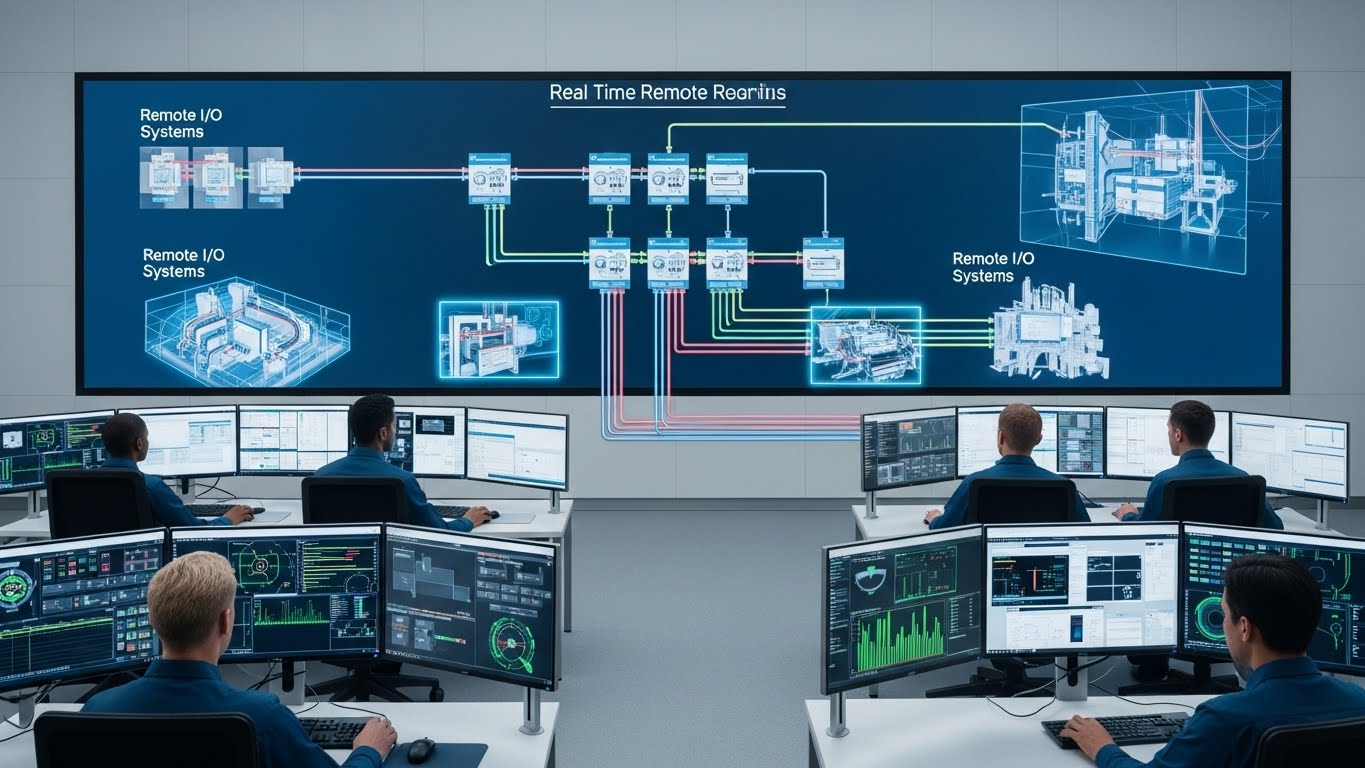
In the complex landscape of industrial automation, efficiency isn’t just a goal; it’s a necessity. Factories and production lines rely on dozens, sometimes hundreds, of sensors and actuators to keep operations running smoothly. Traditionally, connecting all these devices back to a central controller involved bundles of long, expensive, and messy wiring. This approach not only increased installation costs but also made maintenance a nightmare.
This is where remote I/O solutions step in to revolutionize system architecture. By allowing input/output modules to be placed right next to the field devices, they eliminate the need for extensive parallel wiring. Instead, data travels over a single communication cable, simplifying the entire setup.
Whether you are upgrading a legacy system or building a new production line, understanding the synergy between Human Machine Interfaces (HMIs) and remote I/O can significantly enhance your operational flexibility.
The Architecture of Efficiency
At its core, a remote I/O system is about decentralization. Instead of running every wire from a sensor back to a main control cabinet, you place an I/O coupler (a communication gateway) near the machine or process being controlled.
This coupler collects signals from various inputs (like temperature sensors or switches) and outputs (like motors or lights) and sends them to the master controller via a standard fieldbus protocol.
Reducing Complexity and Cost
The primary advantage of remote I/O solutions is the dramatic reduction in wiring. Replacing hundreds of copper wires with a single Ethernet or serial cable saves significant material costs. But the savings go beyond just copper.
Less wiring means smaller electrical cabinets, less time spent on installation, and fewer opportunities for wiring errors. When a fault does occur, troubleshooting is faster because the I/O modules are often equipped with diagnostic LEDs or software monitoring tools, pointing technicians directly to the problem area.
Modularity and Scalability
Modern automation needs are rarely static. A production line today might need to expand tomorrow. Remote I/O systems are inherently modular. You can typically clip on extra digital or analog modules to an existing coupler without disrupting the entire system.
This “slice” architecture allows engineers to mix and match signal types—combining digital inputs, analog outputs, and temperature modules on the same node—tailoring the hardware exactly to the machine’s requirements.
Integrating with HMI Technology
While the I/O handles the raw signals, the Human Machine Interface (HMI) provides the window into the process. As a leading HMI manufacturer, companies like Weintek utilize advanced software to bridge the gap between these physical signals and the human operator.
Seamless Communication
The true power of modern automation lies in connectivity. Advanced HMIs act as more than just screens; they serve as communication hubs. They can support standard protocols like Modbus TCP/IP, CANopen, or EtherCAT, making them perfectly suited to control remote I/O solutions directly.
By integrating the I/O logic or visualization directly into the HMI, operators get real-time feedback on the status of remote sensors. If a remote emergency stop is activated or a temperature sensor fails, the HMI can instantly alert the operator, reducing downtime.
CODESYS and SoftPLC Capabilities
Some advanced setups leverage softPLC technology (like CODESYS) built directly into the HMI. In this configuration, the HMI doesn’t just display data; it acts as the controller. The HMI reads data from the remote I/O solutions, processes the logic, and sends commands back.
This architecture eliminates the need for a separate, standalone PLC for many applications, further reducing hardware costs and simplifying the overall system footprint.
Selecting the Right Remote I/O System
When evaluating options for your facility, consider the following factors to ensure long-term reliability and performance.
Communication Protocols
Ensure compatibility with your existing controllers. Whether your facility runs on Modbus, EtherNet/IP, or CANopen, the I/O coupler must speak the same language. The flexibility to support multiple protocols is a hallmark of a robust system.
Form Factor and Environment
Industrial environments are harsh. Look for hardware designed to withstand vibration, temperature fluctuations, and electrical noise. Compact designs are crucial for fitting into tight machine spaces, while DIN-rail mounting is the industry standard for ease of installation.
Ease of Configuration
Time is money. A system that requires complex coding just to recognize a new module is a bottleneck. Look for plug-and-play functionality or user-friendly configuration software that auto-detects connected modules.
Future-Proofing Your Facility
The trend toward Industry 4.0 and the Industrial Internet of Things (IIoT) relies heavily on data. Remote I/O solutions are the frontline gatherers of this data. By digitizing signals at the source and transmitting them efficiently to HMIs and upper-level SCADA systems, they provide the granular data needed for predictive maintenance and process optimization.
Investing in a flexible, modular I/O system today ensures that your facility is ready for the data-driven demands of tomorrow. By pairing these robust I/O systems with a capable HMI manufacturer, you create an automation ecosystem that is not only efficient but also adaptable to whatever challenges the market brings next.


-

 Blog1 month ago
Simpcit6: Redefining Simplicity in a Complex World
-
 Technology6 months ago
YourAssistantLive com: The Future of Smart Digital Assistance
-

 food6 months ago
Calamariere: How to Perfectly Prepare at Home
-

 Blog6 months ago
Baddi Hub: An Emerging Industrial and Business Hotspot
-

 Health4 months ago
Nerovet AI Dentistry: Enhancing Patient Experience and Treatment Outcomes Dental Care
-

 Technology1 month ago
Voomixi com: The Digital Platform Redefining Online Interaction
-

 Technology5 months ago
Anonibs: The Trending Anonymous Image Board Platform
-

 HomeImprovment5 months ago
Acamento: How Finishing Techniques Define a Building’s Style