Connect with us

Technology

Article to Video With Vidnoz – Transform Blog Posts to Video

Published

on

Sometimes a blog post deserves more than a few readers. People skim, get distracted, or just prefer watching. Turning it into a video seems smart, but most imagine long edits, recording, and hours of tweaking—and that’s where hesitation kicks in.

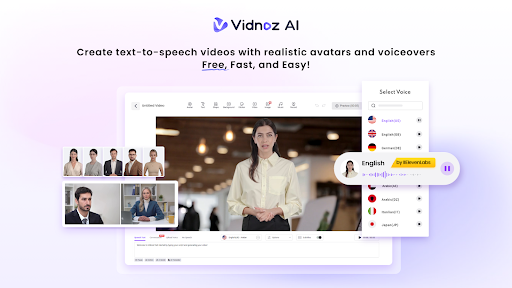
That’s where Vidnoz AI comes in, in a very practical, no-nonsense way. It’s a free AI-powered video creator, certified with ISO/IEC 27001:2022 for Information Security Management, which makes the process feel secure from the start. 

Let’s take a look at how a written article can quietly transform into a video without dragging you into a complicated production cycle.

Why Article-to-Video Matters More Than Expected

A well-written blog post doesn’t automatically reach everyone. Some people genuinely prefer visuals. Others just don’t have the patience to read more than a few lines. Turning the same text into video format fills that gap.

There’s also something convenient about using writing as the base. Since the structure already exists, the video usually flows more smoothly than content made from scratch. And for creators who aren’t big fans of being on camera all the time, this method feels like a relief — your ideas are still visible without needing to film yourself.

Manual Editing vs Using a blog to video AI tool

A simple comparison makes things clearer:

Task Manual Editing With a blog to video AI tool
Drafting visuals Hunting for clips manually Scenes matched automatically
Voiceovers Mic + noise-free space 1830+ AI voices
On-camera presence Not always ideal Avatars present instead
Turnaround time Slow Usually minutes
Skill level Needs editing experience Beginner-friendly

This difference alone explains why more creators are shifting toward automation.

The Features That Make Vidnoz Useful for Article-to-Video

Here’s what makes Vidnoz AI feel practical instead of overwhelming.

  • 1700+ Lifelike Avatars

There are avatars built for different industries and roles. You can choose one straight from the library or customize something specific. Some people make a digital twin; others use motion avatars or product avatars, depending on the topic. You always find something that fits the style of your content.

  • 1830+ Lip Sync AI Voices

ElevenLabs, Microsoft, and Google provide power to the voices in more than 140 languages. This is convenient when you have an audience that cuts across geographical locations. And to be reconciled, when you have ever disliked the sound of your own voice, these voices may actually be a relief.

  • 2800+ Pre-Designed Video Templates

Templates act like shortcuts. You paste your blog content, make a few adjustments, and you already have a structured layout. It’s hard to mess up a video when the foundation is set for you.

  • Free Daily Use

You get two minutes of free video generation each day. Enough for testing ideas, creating short clips, or converting sections of longer articles.

Using the Vidnoz AI article to video Workflow

The process is simple, even if editing isn’t your thing.

Step 1: Choose a Template & Avatar

Pick a template that feels closest to your blog’s tone. Something clean for business topics, something bright for lifestyle content — it’s your call. Then choose an avatar that feels right for the voice of the content.

Step 2: Create AI Voiceover

This part is usually fun. Browse through the 1830+ voices, test a few, and choose the one that matches the mood you want. Add your text in smaller segments so the pacing sounds natural.

Step 3: Add Custom Touch

Tweak the order of scenes. Add images. Add highlights. Shorten lines that feel too long. These tiny adjustments help shape the final video and make it feel more intentional.

Step 4: Generate AI Video and Share

Click generate and let the system do the work. Then download and share your video anywhere.

Practical Tips for Turning Blogs Into Videos

A few habits make things smoother:

  • Break large paragraphs into shorter bits. Videos breathe better that way.
  • Use visuals that support your point. Even simple stock images help.
  • Keep voiceover text clean and simple. AI voices sound best with clear sentences.
  • Try more than one voice occasionally. Tone changes the feel of the entire message.
  • If your blog already performs well, turning it into a video is just extending its reach.

FAQs About Converting Articles to Video

1. Can long blog posts still work with a blog-to-video AI tool?

Yes. You can divide long posts into smaller sections and let the tool convert them scene by scene.

2. Does the avatar need to match my niche perfectly?

Not exactly, but choosing something relevant helps. With 1700 avatars available — plus custom ones — it’s easy to find a match.

3. Is AI narration better than recording my own voice?

It depends. AI narration is quick and consistent, but you can still upload your own voice if you prefer something more personal.

The Key Takeaways

Turning an article into a video doesn’t need to feel like another full-time job. With Vidnoz AI, the workflow becomes simple. Your blog text turns into scenes, the voiceover takes minutes, and suddenly you have a polished video ready for multiple platforms. 

It’s a practical way to expand your reach without rewriting or filming. If you’ve never tried transforming a blog post into video format, this is probably the easiest place to start. Head over to Vidnoz AI and see how quickly your words can take on a visual form using this AI text-to-video generator.


Continue Reading

Technology

Gunnari Auvinen: Ethical Issues of Artificial Intelligence in Software Development

Published

on

By

Gunnari Auvinen is a staff software engineer based in Cambridge, Massachusetts, with extensive experience designing, reviewing, and maintaining complex software systems. Currently at Labviva, Gunnari Auvinen contributes to architectural planning, code reviews, and system design sessions, while ensuring engineering teams have a shared understanding of highly technical platforms. His work has included leading gap analyses, designing service definition templates, and serving as technical lead for next generation order processing systems.

Before joining Labviva, Gunnari Auvinen held senior engineering roles at Turo and Sonian, where he worked on modernizing legacy systems, improving user interfaces, and reducing technical debt. Earlier in his career, he served as a system integration and test engineer at General Dynamics Advanced Information Systems, supporting large scale programs across the United States. With a background in electrical and computer engineering from Worcester Polytechnic Institute, Gunnari Auvinen brings a practical perspective to discussions around how ethical considerations shape AI driven software development.

Ethical Issues of Artificial Intelligence in Software Development

Artificial intelligence (AI) is proving to be a potent tool for transforming various industries by enhancing decision-making, automating routine tasks, and enabling computer systems to adapt and learn from data. Software developers have adopted this resource and are leveraging it to develop AI-powered software that meets clients’ needs.

They begin by collecting vast amounts of data, selecting a suitable model to manage the data, and conducting performance evaluations to ensure the software is consistent and efficient. Throughout this development lifecycle, however, several ethical concerns arise that, if not properly handled, can jeopardize the credibility and integrity of the software developers, clients who buy and use the software, and the product itself.

One such concern is bias, which refers to the systematic and unfair prejudice in data collection efforts that can create or exacerbate stereotypes and reinforce social inequalities. Using biased data can also compromise fairness in sensitive business practices, such as hiring, lending, and criminal case resolution in the justice system.

Notably, the choice of training models to manage the data also introduces bias in the software development life cycle. Developers contribute to this by choosing biased AI features or by categorizing certain datasets in ways that bias the system.

To handle bias and improve a software’s integrity and credibility, developers should collect diverse data and ensure the datasets conclusively reflect the population the system will serve. Conducting regular audits and testing of AI-powered software is another approach for identifying and eliminating bias. It is advisable to engage external or independent experts during the audit to effectively identify subjective decisions that may escape an in-house developer’s attention.

Data security is another significant concern in both software development and usage. AI systems require vast datasets, especially personal information, to train and operate. This raises questions over how the information is collected, stored, used, and shared. Critics point out that AI systems can collect more data than required, that data used for one purpose can be repurposed without the owner’s consent, and that data derived from surveillance systems can invasively track people. System breaches and hacks create additional data security risks, as attackers target centralized repositories of personal information.

To mitigate this issue, developers should conclusively reveal to people what data will be collected and how it will be used. Gaining their informed consent and providing transparent privacy notices is important for building trust. Additionally, developers should train systems on data minimization to ensure they collect only what is necessary. Data encryption, implementing access controls, and conducting regular security audits on systems effectively deter hackers and ensure data is safe in storage and transit.

Lastly, AI-driven software development is criticized for its environmental implications. AI systems require substantial computational power, often running on energy-intensive data centers. Experts claim that training a single model throughout the development lifecycle consumes vast amounts of electricity, potentially disrupting grid stability and generating significant carbon emissions, especially when data centers run on fossil fuels.

Beyond energy use, AI system development contributes to environmental strain through hardware production. Developers require specialized processors that are sourced from resource-intensive mining, manufacturing, and supply chains, all of which contribute to emissions and electronic waste. Moreover, these professionals conduct frequent hardware upgrades, which further exacerbate the problem.

Addressing these environmental concerns requires efficient model designs, such as adopting small architectures that consume considerably less energy than complex architectures. Developers should also consider replacing fossil fuels with alternative energy sources, such as solar and wind power, to power data centers. Ethical AI-powered software development must balance performance gains with sustainability to ensure innovation does not destroy the environment.

About Gunnari Auvinen

Gunnari Auvinen is a staff software engineer based in Cambridge, Massachusetts, with a career spanning system integration, full stack development, and technical leadership. Currently with Labviva, he focuses on architecture reviews, system design, and maintaining production services. His prior experience includes senior engineering roles at Turo and Sonian, as well as early work at General Dynamics Advanced Information Systems. Gunnari Auvinen holds a degree in electrical and computer engineering from Worcester Polytechnic Institute.

Continue Reading

Technology

Video Editor Free: The Smart Way to Start Video Editing Without Cost

Published

on

By

Video content has become one of the most powerful tools in the digital world. From social media and YouTube to business marketing and online education, videos are everywhere. However, many beginners believe that professional video editing requires expensive software and advanced skills. The truth is, with a video editor free, anyone can start video editing easily without spending money.

Free video editing tools have improved a lot over the years, offering powerful features that were once limited to paid software. This makes video creation accessible for everyone, regardless of budget or experience.

Why Video Editing Is So Important Today

Video editing is not just about cutting clips and adding effects. It helps tell a story, deliver a message clearly, and keep viewers engaged. Poorly edited videos can feel boring and unprofessional, while well-edited content builds trust and attention.

Whether you are a content creator, student, marketer, or business owner, learning basic video editing can significantly improve the quality of your content and online presence.

What Is a Video Editor Free?

A video editor free is software or an online tool that allows users to edit videos without paying any subscription or license fee. These tools usually include essential features such as trimming, cutting, merging clips, adding text, music, transitions, and basic effects.

Many free video editors are designed with beginners in mind, offering simple interfaces and easy workflows. At the same time, they are powerful enough to handle everyday video editing needs.

Benefits of Using a Video Editor Free

One of the biggest advantages of using a video editor free is cost savings. You can start video editing without worrying about monthly payments or expensive licenses. This is especially useful for beginners, freelancers, students, and small businesses.

Another benefit is ease of use. Free editors often focus on simplicity, making it easy to learn video editing basics. Many tools also support high-quality exports, allowing you to create HD videos without paying anything.

How Video Editing Has Become More Accessible

In the past, video editing was limited to professionals with expensive software and powerful computers. Today, free tools and cloud-based editors have changed everything. Anyone with a basic device and internet connection can now edit videos.

This accessibility has helped millions of creators share their ideas, promote their brands, and build audiences without technical barriers.

Key Features to Look for in a Video Editor Free

When choosing a video editor free, there are some important features to consider. Trimming and cutting tools are essential for removing unwanted parts. Text and caption options help explain your message clearly. Music and audio controls improve the overall feel of the video.

Export quality is also important. A good free video editor should allow you to export videos in HD without heavy watermarks or limitations.

Video Editing for Social Media Content

Social media platforms rely heavily on video content. Short, engaging videos perform better than long, unedited ones. With a video editor free, you can easily trim clips, adjust aspect ratios, add captions, and prepare videos for platforms like Instagram, TikTok, Facebook, and YouTube.

Consistent video editing helps maintain quality and keeps your content aligned with platform requirements.

Using Video Editing for Business and Marketing

Businesses use video editing to promote products, explain services, and connect with customers. You don’t need expensive tools to create professional marketing videos. A video editor free allows small businesses to compete with bigger brands by producing clean and engaging content.

Edited videos help improve brand image, increase engagement, and boost conversion rates.

Learning Video Editing as a Beginner

For beginners, video editing may seem intimidating at first. However, free tools make the learning process much easier. Most video editors offer drag-and-drop functionality, simple timelines, and clear controls.

By starting with a video editor free, beginners can learn the basics of video editing, understand workflows, and build confidence before moving to advanced tools if needed.

Common Video Editing Mistakes to Avoid

One common mistake in video editing is adding too many effects, which can make videos look messy. Another mistake is ignoring audio quality. Poor sound can ruin even the best visuals.

Beginners should also avoid exporting videos in low resolution when HD options are available. Paying attention to these details helps improve overall video quality.

SEO Benefits of Well-Edited Videos

From an SEO perspective, video editing plays an important role. Well-edited videos keep users engaged longer, which helps improve website performance metrics like dwell time and bounce rate.

When videos are properly edited and optimized with titles, descriptions, and captions, they are more likely to appear in search results. Using a video editor free makes it easier to create SEO-friendly video content consistently.

The Future of Free Video Editing Tools

The future of video editing is becoming more user-friendly and accessible. Free tools are continuously improving, offering better performance, smarter features, and cleaner exports. AI-powered editing features are also being added to free tools, making video editing faster and easier.

As video content demand grows, free video editors will continue to play a major role in helping creators produce high-quality content without high costs.

Final Thoughts

Video creation is no longer limited by budget or technical skills. With a video editor free, anyone can start video editing and create professional-looking content. These tools provide all the basic features needed to edit videos effectively, whether for social media, business, education, or personal use.

If you want to improve your content quality, grow your audience, or promote your brand, starting with a free video editor is a smart and practical choice. With creativity and consistency, free tools can deliver results just as powerful as paid software.

Continue Reading

Technology

Babeltee: How to Use Scale Your Online Business Globally

Published

on

By

Babeltee

Babeltee is a term that has recently started to surface across digital conversations, creative branding spaces, and conceptual discussions online. While it may sound abstract at first, Babeltee represents a modern blend of communication, identity, and expression in an increasingly connected world. The appeal of lies in its flexibility as a concept, allowing it to be interpreted across industries such as technology, media, fashion, and digital culture. As new ideas constantly reshape how people interact and express themselves online, fits naturally into this evolving narrative. In the first encounter, may appear as just another coined word, but its growing usage suggests deeper relevance. It symbolizes innovation, diversity of voices, and the creative merging of ideas in a global environment.

Understanding the Meaning of Babeltee

The Core Idea Behind Babeltee

At its core, Babeltee draws inspiration from the idea of diverse languages and unified expression. The name itself hints at multiplicity and creativity, suggesting a space where different thoughts, cultures, and perspectives coexist. does not belong to a single definition, which is precisely what makes it powerful. It can represent a platform, a brand identity, or even a philosophy centered on inclusive communication.

Babetee resonates strongly with modern audiences who value originality and openness. Instead of limiting meaning, the concept encourages exploration and reinterpretation based on context.

Babeltee as a Symbol of Modern Communication

In today’s digital age, communication is no longer linear. Social media, virtual communities, and digital platforms have created layered conversations happening simultaneously across the globe. Babelee reflects this complexity. It symbolizes how ideas overlap, transform, and evolve as they move between people and platforms.

Rather than focusing on uniformity, embraces diversity in expression, making it a fitting term for modern digital ecosystems.

Babeltee in Digital Culture

How Babeltee Aligns with Online Trends

Digital culture thrives on new terminology that captures shifting behaviors and attitudes. Babetee aligns with trends such as user-generated content, decentralized communication, and creative collaboration. It can be associated with spaces where individuals contribute unique voices while still participating in a shared experience.

Because is not rigidly defined, it adapts well to digital environments that value experimentation and innovation. This adaptability helps it remain relevant even as trends change.

Babeltee and Community Building

Online communities today are built around shared interests rather than geography. Bbeltee reflects this shift by representing a meeting point for varied ideas. Communities that adopt the concept often emphasize inclusivity, creativity, and dialogue. By encouraging interaction without strict boundaries, Baeltee supports organic growth within digital communities, allowing them to evolve naturally over time.

Babeltee in Branding and Identity

Why Brands Are Drawn to Babeltee

Modern brands seek names and concepts that feel fresh, flexible, and memorable. Babeltee offers all three. Its abstract nature allows brands to shape its meaning according to their mission and audience. Whether used in fashion, technology, or digital services, provides a foundation for storytelling and differentiation.

Brands that align with often focus on innovation, cultural awareness, and global reach. This makes the term particularly attractive in competitive markets where standing out is essential.

Babeltee as a Creative Identity

Beyond commercial branding, Babeltee can also function as a personal or creative identity. Artists, writers, and digital creators may adopt Bbeltee as a symbol of their multifaceted work. It reflects the idea that creativity does not need to fit into one category. By using as an identity marker, creators can signal openness to experimentation and cross-disciplinary collaboration.

The Conceptual Flexibility of Babeltee

Babeltee Across Different Industries

One of the strongest aspects of Babeltee is its ability to fit into multiple industries without losing relevance. In technology, it can represent interconnected systems and communication tools. In fashion, may symbolize cultural fusion and expressive design. In media, it can stand for storytelling that crosses linguistic and cultural boundaries. This versatility ensures that is not confined to a single niche, increasing its long-term potential.

Babeltee and Innovation

Innovation often begins with ideas that are not fully defined. Baeltee thrives in this space of possibility. It encourages experimentation and the blending of concepts, which are essential drivers of progress. By remaining open-ended, Babeltee allows innovators to explore new directions without being restricted by traditional frameworks. This makes a useful conceptual tool for forward-thinking projects.

The Growing Online Interest in Babeltee

Search and Visibility Trends Around Babeltee

As digital audiences continue to discover Babeltee, interest in the term is gradually increasing. People are drawn to unique concepts that invite curiosity, and does exactly that. Its unfamiliar yet approachable nature sparks engagement and discussion.

Search visibility around benefits from its originality, as there is little saturation compared to common keywords. This gives early adopters an advantage in defining how the term is perceived.

Babeltee in Content Creation

Content creators are constantly looking for new angles and concepts to explore. Babelte provides a rich foundation for articles, discussions, and creative projects. Because it can be interpreted in many ways, it allows creators to produce original content without repetition. This flexibility supports long-term content strategies focused on uniqueness and depth.

The Future Potential of Babeltee

How Babeltee May Evolve

As more people engage with Babeltee, its meaning will naturally evolve. This evolution is not a weakness but a strength. Babelte can grow alongside cultural and technological changes, absorbing new interpretations while retaining its core idea of diverse expression. Future applications of may include digital platforms, creative movements, or even educational initiatives focused on communication and collaboration.

Babeltee as a Long-Term Concept

Unlike trends that fade quickly, Babeltee has the potential to remain relevant due to its adaptability. Concepts that allow for reinterpretation tend to last longer because they can be reshaped to fit new contexts. Babltee’s open-ended nature ensures that it can continue to inspire new uses over time.

Conclusion

Babeltee is more than just a word; it is a reflection of how modern communication, creativity, and identity intersect. Its strength lies in its flexibility, inclusivity, and relevance across multiple domains. As digital culture continues to expand and diversify, concepts like become increasingly valuable.

By embracing Babeltee, individuals and organizations can align themselves with innovation, openness, and global connection. Whether viewed as a branding element, a creative philosophy, or a symbol of modern interaction, stands as a meaningful representation of today’s interconnected world.

Continue Reading

Trending