
Education
Best Practices for Crafting a Compelling Application Story

You have spent the last four years curating a pristine GPA, crushing advanced placement classes, and building a list of extracurriculars that would make a CEO jealous. You are comfortable with calculus and confident in history. Yet, when faced with the blank page of a personal statement, even the most accomplished students often freeze.
It is a common phenomenon. High-achieving students are trained to find the “right” answer, but in college essays, there isn’t one. The personal statement isn’t a test of how impressive you are; it is an opportunity to show admissions officers the human being behind the transcripts. It is about communicating something real to the person reading your file.
If you are staring at a blinking cursor wondering how to translate your life experience into 650 words, you are not alone. Through years of coaching students aiming for Ivy League and selective universities, clear patterns have emerged regarding what works and what falls flat. To help you navigate this high-stakes writing process, we have compiled the essential college essay dos and don’ts that every applicant needs to know.
- Timing: The Danger of the Last Minute
It is genuinely surprising how many students wait until mere days before the deadline to begin their essays. You have likely spent four years preparing your academic profile for this moment. Why would you risk capping off that effort with a rushed narrative constructed over a weekend?
Don’t: Leave it until the final week
Procrastination is the enemy of depth. When you rush, you inevitably rely on the first idea that pops into your head, which is usually the same idea thousands of other applicants have had. A rushed essay rarely has the nuance or introspection required to stand out in a competitive pool.
Do: Think before you write
The most difficult part of the college essay process isn’t the typing; it is the thinking. Before you even open your laptop, give yourself space to reflect. Go for a walk, sit in a quiet room, and think about the experiences that have shaped you.
Writing is a process of discovery. The time you spend away from the screen, turning memories over in your mind, is often where the real work happens. By the time you sit down to draft, you should have a clear direction born from genuine reflection, not panic.
- Inspiration: Why Examples Can Backfire
When you are unsure how to start, the temptation to Google “successful Ivy League essays” is overwhelming. You want to see what a “good” essay looks like so you can model yours after it. However, this is one of the biggest traps for high-achieving students.
Don’t: Read college essay examples
Reading sample essays usually leads to two outcomes: stress or imitation. You might read a viral essay about a student who built a nuclear reactor in their garage and feel inadequate. Or, you might subconsciously adopt another student’s voice, cadence, or structure.
The moment you start imitating, you stop sounding like yourself. Admissions officers read thousands of essays; they can spot a derivative “template” essay from a mile away.
Do: Verbalize your thoughts
Instead of reading what strangers have written, talk to people who actually know you. Sit down with a parent, a trusted teacher, a friend, or a coach and discuss your ideas out loud.
The goal here isn’t to get feedback on your writing style yet. The goal is to explore your experiences in a conversational, low-pressure environment. often, the way you explain a story to a friend over coffee is far more authentic and engaging than the stiff, formal version you try to write on paper.
- Content: The Resume Trap
Your application already includes an activities list where you can detail your leadership roles, awards, and volunteer hours. The essay serves a completely different purpose.
Don’t: Summarize your extracurriculars
One of the most critical college essay dos and don’ts is this: do not turn your essay into a prose version of your resume. Saying “I was president of the debate club, where I learned leadership” adds nothing new to your file. Admissions officers already know what you did; they want to know who you are.
Do: Answer the prompt with purpose
It sounds simple, yet so many students write an entire essay without ever looking back at the Common App prompt they selected. While you don’t need to follow the prompt rigidly, the questions are designed to help you reflect on specific aspects of your growth.
Choose a prompt that resonates with you and answer it with clarity. Use the essay to offer a glimpse into how your mind works. Show the reader how you process the world, how you handle conflict, or what makes you curious. That internal landscape is far more interesting than a list of accolades.
- Tone: The Myth of What They “Want” to Hear
There is a pervasive myth that colleges are looking for a specific type of story—usually a dramatic tragedy or a triumphant tale of overcoming adversity.
Don’t: Write for an imagined audience
When you try to guess what an admissions officer wants to hear, you usually end up writing clichés. You might write the standard “I faced a challenge, it was hard, but now I am stronger” narrative. This approach strips your life of its unique details and reduces your experience to a generic moral. If your essay could have been written by any other student with a similar background, it isn’t personal enough.
Do: Be authentic
The only way to write something meaningful is to draw from reality. You don’t need a tragedy or a grand epiphany to write a great essay. You just need honesty.
Write about an experience that actually matters to you, not one you think sounds impressive. If you trust that your own story is enough, and you take the time to explain why it matters to you, the essay will resonate. Authenticity beats strategy every time.
- The Process: Respecting the Weight of the Essay
Because the essay doesn’t come with a letter grade, some students assume it matters less than their transcript. This is a dangerous misconception.
Don’t: Underestimate the essay
Admissions officers evaluate your essay with the same rigor they apply to the rest of your file. It is a crucial data point that adds color and context to the hard numbers of your GPA and test scores. Whether formally scored or used as a tie-breaker, the essay can be the difference between an acceptance and a rejection.
Do: Revise, revise, revise
Your first draft is just that—a first draft. It is rarely the version you should submit. The best writing happens in the revision process.
Once you have your ideas down, go back and refine. Look for vague language and replace it with specific details. Ensure your voice sounds like you. This process takes time, which brings us back to our first point: give yourself the runway to revise until you have a piece of writing you are truly proud to submit.
Frequently Asked Questions
Navigating the college essay dos and don’ts can be confusing. Here are answers to some common questions students ask during the writing process.
Should I read sample essays to get ideas?
No, it is generally not recommended. The best essays come from internal reflection, not external imitation. Reading other people’s work can cloud your own voice and make you second-guess your story. Trust your own experiences.
Is it okay to write my essay the week before it is due?
Technically, yes, you can, but it is extremely risky. While some students might pull it off, most essays written in a rush feel shallow. Admissions officers can tell when a student hasn’t taken the time to reflect and revise.
What makes a college essay actually stand out?
Specificity and honesty. You don’t need a movie-script life story. You need to tell the truth about your specific experience in a way only you can. That level of personal detail is what makes an essay memorable.
Can I write about common topics like sports or service trips?
Yes, but you must be careful. These are crowded topics. If you write about sports, don’t just write about scoring the winning goal. Find the angle that surprised you, challenged your worldview, or changed how you interact with others. The topic matters less than your unique perspective on it.
How important are grammar and spelling?
They are important, but they aren’t everything. Admissions officers are human; they are looking for insight first. However, a clean, typo-free essay shows that you care about your work and respect the reader’s time.
Final Thoughts
Writing a personal statement is likely different from any assignment you have done in high school. It requires vulnerability, introspection, and a willingness to draft and redraft.
If you are aiming for top-tier schools, the essay is your best opportunity to rise above the crowd of other qualified applicants. By following these college essay dos and don’ts, you can avoid the common pitfalls of clichés and procrastination. Remember, the goal isn’t to sound like a genius or a hero—it is to sound like you.

In today’s fast-paced digital world, access to quality education is no longer limited by geography, time, or traditional classroom walls. Robyoc.online emerges as a powerful platform that reshapes how individuals approach knowledge, skill development, and career growth. As technology continues to redefine communication and information sharing, Robyoc.online stands out as a comprehensive learning environment designed to support students, professionals, entrepreneurs, and lifelong learners. The platform bridges the gap between ambition and achievement by providing structured, flexible, and accessible educational resources tailored to modern needs.
Understanding the Vision Behind Robyoc.online
Robyoc.online is built on a simple yet transformative vision: education should be accessible, adaptable, and empowering. The platform recognizes that learning today extends beyond textbooks and lectures. It includes interactive tools, multimedia resources, collaborative communities, and real-world application. By focusing on digital accessibility, Robyoc.online ensures that learners from diverse backgrounds can participate in meaningful educational journeys without facing unnecessary barriers.
The philosophy guiding Robyoc.online revolves around learner-centered design. Courses are structured to meet the needs of individuals at different stages of their academic or professional paths. Instead of overwhelming users with complex systems, the platform emphasizes clarity, simplicity, and intuitive navigation. This approach encourages consistent engagement and reduces the friction often associated with online learning platforms.
Robyoc.online and the Evolution of Online Learning
The landscape of education has transformed dramatically over the past decade. The growth of e-learning platforms has demonstrated how digital tools can enhance comprehension and expand opportunities. Robyoc.online positions itself within this evolution by combining technological innovation with educational best practices. Rather than merely hosting courses, it creates a dynamic ecosystem where learning becomes interactive and engaging.
Online learning is no longer just an alternative; it is a primary choice for millions worldwide. Robyoc.online adapts to this reality by offering content that aligns with industry standards and current market trends. This alignment ensures that learners not only gain theoretical knowledge but also practical insights that can be directly applied in real-life scenarios.
The table below highlights how Robyoc.online compares with traditional education models in terms of flexibility and accessibility.
| Aspect | Traditional Education | Robyoc.online Learning |
|---|---|---|
| Schedule Flexibility | Fixed timetables | Self-paced modules |
| Location Dependency | Physical classrooms | Accessible anywhere |
| Resource Availability | Limited to campus | Digital library access |
| Interaction | In-person sessions | Interactive virtual tools |
| Cost Structure | Higher overhead | More affordable options |
Comprehensive Course Categories on Robyoc.online
A defining strength of Robyoc.online lies in its diverse range of course categories. The platform does not restrict learners to a single discipline. Instead, it embraces multidisciplinary education that reflects the interconnected nature of modern industries. From technology and business to creative arts and personal development, Robyoc.online curates courses that cater to both emerging and established fields.
Technology courses may include programming fundamentals, data analysis, cybersecurity awareness, and digital marketing strategies. Business-related modules explore entrepreneurship, leadership, financial planning, and organizational management. Creative fields such as graphic design, writing, and multimedia production receive equal emphasis, allowing learners to pursue artistic ambitions alongside professional skills.
The versatility of Robyoc.online ensures that users can explore new interests without switching platforms. This integrated approach supports continuous learning and encourages intellectual curiosity.
User Experience and Interface Design in Robyoc.online
An effective online learning platform must prioritize usability. Robyoc.online achieves this by implementing a clean and structured interface that enhances navigation. Upon registration, users are guided through a personalized dashboard where they can track progress, enroll in new courses, and review completed modules.
The design philosophy centers on minimizing distractions and maximizing focus. Learning materials are presented in organized sections, often supplemented by multimedia elements such as videos, infographics, and interactive quizzes. Robyoc.online integrates progress tracking tools that help learners visualize achievements and stay motivated throughout their educational journey.
Accessibility features also play a vital role. The platform supports multiple devices, ensuring compatibility with smartphones, tablets, and desktop computers. This multi-device accessibility enables users to learn during commutes, breaks, or from the comfort of home.
The Role of Expert Instructors on Robyoc.online
The quality of an educational platform is closely tied to the expertise of its instructors. Robyoc.online collaborates with industry professionals, educators, and subject-matter experts to develop high-quality course content. These instructors bring practical experience and academic knowledge to their lessons, enriching the learning experience with real-world insights.
Robyoc.online ensures that instructors design courses using clear objectives and structured modules. Each course typically follows a logical progression, beginning with foundational concepts and gradually advancing toward more complex topics. This systematic approach prevents learners from feeling overwhelmed and promotes steady comprehension.
The relationship between instructors and learners is further strengthened through discussion forums and feedback mechanisms. Robyoc.online fosters communication channels that allow participants to ask questions, share ideas, and engage in collaborative problem-solving.
Flexibility and Self-Paced Learning with Robyoc.online
One of the most compelling features of Robyoc.online is its commitment to flexibility. Modern learners often juggle multiple responsibilities, including work, family, and personal commitments. The platform accommodates these realities by offering self-paced learning modules that allow users to progress according to their own schedules.
Unlike rigid academic calendars, Robyoc.online enables learners to pause, revisit, or accelerate content as needed. This adaptability reduces stress and supports deeper understanding. When individuals learn at their own pace, they can dedicate sufficient time to challenging topics without feeling rushed.
The following table illustrates the benefits of self-paced learning within Robyoc.online compared to time-bound systems.
| Feature | Time-Bound Systems | Robyoc.online Self-Paced Model |
|---|---|---|
| Deadline Pressure | High | Minimal |
| Content Repetition | Limited | Unlimited access |
| Learning Speed | Fixed | Customizable |
| Work-Life Balance | Challenging | Manageable |
Certification and Career Development Opportunities
Professional recognition is a significant motivator for online learners. Robyoc.online addresses this need by offering certificates upon course completion. These certificates can serve as evidence of skill acquisition and may enhance resumes or professional profiles.
The platform emphasizes career-oriented learning pathways. Instead of isolated courses, Robyoc.online may group related modules into structured programs designed to prepare learners for specific industries. By aligning educational content with market demands, the platform increases the practical value of its certifications.
Career guidance resources may also be integrated into the learning experience. These resources could include resume-building advice, interview preparation strategies, and portfolio development suggestions. Such features reinforce the idea that Robyoc.online is not just about acquiring knowledge but also about applying it effectively.
Community Engagement and Collaborative Learning
Learning thrives in communities where individuals share perspectives and experiences. Robyoc.online encourages interaction through discussion boards, peer review activities, and collaborative projects. This sense of community reduces isolation and fosters a supportive learning environment.
Collaborative learning allows participants to explore diverse viewpoints and refine their understanding through dialogue. Robyoc.online integrates communication tools that facilitate these exchanges while maintaining a respectful and inclusive atmosphere.
The sense of belonging created within the platform can significantly enhance motivation. When learners feel connected to a community, they are more likely to remain committed to their educational goals.
Technological Innovation and Future Growth of Robyoc.online
Technology is the backbone of any digital learning hub. Robyoc.online continuously evolves by adopting innovative tools that improve user experience and instructional quality. Advanced analytics may help track learner progress and identify areas for improvement. Adaptive learning systems could personalize content recommendations based on individual performance patterns.
As artificial intelligence and immersive technologies develop further, Robyoc.online has the potential to integrate interactive simulations, virtual labs, and augmented reality experiences. These enhancements would deepen engagement and bridge the gap between theoretical knowledge and practical application.
The commitment to innovation ensures that Robyoc.online remains relevant in an ever-changing educational landscape. By staying responsive to technological advancements, the platform can continue delivering value to its growing community of learners.
Why Robyoc.online Stands Out in a Competitive Market
The online education market is increasingly competitive, with numerous platforms vying for attention. Robyoc.online differentiates itself through its balanced approach to accessibility, quality, and user experience. Rather than focusing solely on content volume, the platform emphasizes meaningful learning outcomes.
Transparency in course descriptions, structured learning paths, and clear certification processes contribute to its credibility. Robyoc.online also benefits from a streamlined interface that reduces cognitive overload and enhances concentration.
The integration of flexibility, expert guidance, and technological innovation positions Robyoc.online as a reliable hub for those seeking continuous growth. Its learner-centered philosophy ensures that individuals remain at the heart of every design decision.
The Long-Term Impact of Choosing Robyoc.online
Investing in education is ultimately an investment in oneself. Robyoc.online provides a platform where knowledge acquisition becomes an empowering journey rather than a burdensome task. The flexibility and diversity offered by the platform support lifelong learning, which is increasingly essential in a rapidly evolving job market.
Learners who engage with Robyoc.online can cultivate both technical and soft skills. Critical thinking, problem-solving, communication, and adaptability are nurtured alongside specialized knowledge. This holistic development prepares individuals for dynamic professional environments.
The long-term impact extends beyond career advancement. Education enhances confidence, broadens perspectives, and fosters a deeper understanding of global challenges. Robyoc.online contributes to this transformation by making high-quality learning accessible to a broad audience.
Conclusion
Robyoc.online represents more than just an online learning platform; it symbolizes a shift toward accessible, flexible, and innovative education. By combining expert instruction, diverse course offerings, and user-friendly technology, the platform empowers learners to take control of their personal and professional development.
As digital transformation continues to influence every aspect of society, platforms like Robyoc.online play a critical role in shaping the future of education. Through continuous improvement and dedication to learner success, it stands as a dependable hub for those seeking growth in an interconnected world.

Learning About Smart Cities Through Chinese Language Education
If you want to learn Chinese online, an online Chinese teacher can help explain words used in technology and urban life. Chinese teaching institutions like GoEast Mandarin in Shanghai may also include examples from “smart cities.” Students can discuss traffic systems, energy grids, and mobile apps, allowing them to practice vocabulary in real-life contexts.
After all, applications like Alipay are used almost every day, and features such as Ant Forest are good examples of smart city concepts in action.
Experiencing Technology in Everyday Life in Shanghai
Walking through Shanghai, you quickly notice the advanced technological environment. Streetlamps dim when no one passes, saving energy, while water systems adjust flow after heavy rain to prevent flooding.
AI systems monitor air quality and send alerts to hospitals or offices when pollution levels rise. Startups test autonomous buses and delivery robots, and city planners analyze data to improve streets and parks.
Everything is interconnected, yet the city operates smoothly, with most technology working quietly in the background.
Shenzhen’s Advanced Approach to Urban Intelligence
Shenzhen has taken the smart city idea even further. Sensors in buildings detect maintenance issues before they become serious, and emergency services receive automatic alerts when accidents occur.
Mobile apps guide people toward less crowded streets or promote healthier habits. Companies continuously refine algorithms to reduce energy waste and traffic congestion. In many neighborhoods, the city seems to anticipate residents’ needs before they even notice them.
AI-Driven Infrastructure and Public Services
Technology influences nearly every aspect of life in Chinese smart cities. Public transport systems use AI to adjust schedules when events cause sudden passenger surges.
Electricity grids redistribute energy according to demand, preventing shortages during peak hours. Street cameras scan for hazards, and drones monitor construction sites.
At the same time, AI-assisted healthcare systems analyze data to suggest treatments or detect potential outbreaks, making urban management precise and efficient.
How Smart Cities Improve Daily Urban Experiences
Smart cities also reshape how people experience urban spaces. Parks use smart lighting that brightens when someone walks by, while trash bins signal when they need emptying.
Roads have sensors that detect potholes or icy conditions, alerting maintenance teams immediately. Autonomous taxis and delivery robots move quietly through busy streets.
Residents enjoy convenience without seeing the complex networks that make it possible, giving the city a responsive, almost living quality.
Social, Educational, and Cultural Benefits of Smart Cities
The social dimension of smart cities grows alongside technology. Mobile apps help neighbors organize events and locate local services easily.
Public transport apps allow commuters to plan routes based on real-time conditions. AI-assisted education supports schools and universities by analyzing performance and adjusting teaching methods.
Cultural venues such as museums and theaters use data to manage visitor flow and prevent overcrowding, enhancing safety and comfort.
Planning, Sustainability, and the Future of Smart Cities
Developing smart cities requires strong coordination between governments, technology companies, and researchers.
Cities like Shanghai and Shenzhen host testing zones where new solutions are evaluated before wider implementation. Traffic systems, energy distribution, and public services are continuously monitored and improved.
Sustainability plays a key role, with renewable energy, reduced waste, and efficient resource use built into city planning, proving that technology and environmental responsibility can work together.
Conclusion: Invisible Technology, Visible Benefits
Smart cities in China demonstrate how advanced technology can shape urban life while remaining largely invisible. Residents benefit from improved safety, efficiency, and convenience, even though they rarely see the algorithms operating behind the scenes.
These cities offer a glimpse into a future where innovation quietly supports daily life, making urban living smoother and more sustainable.
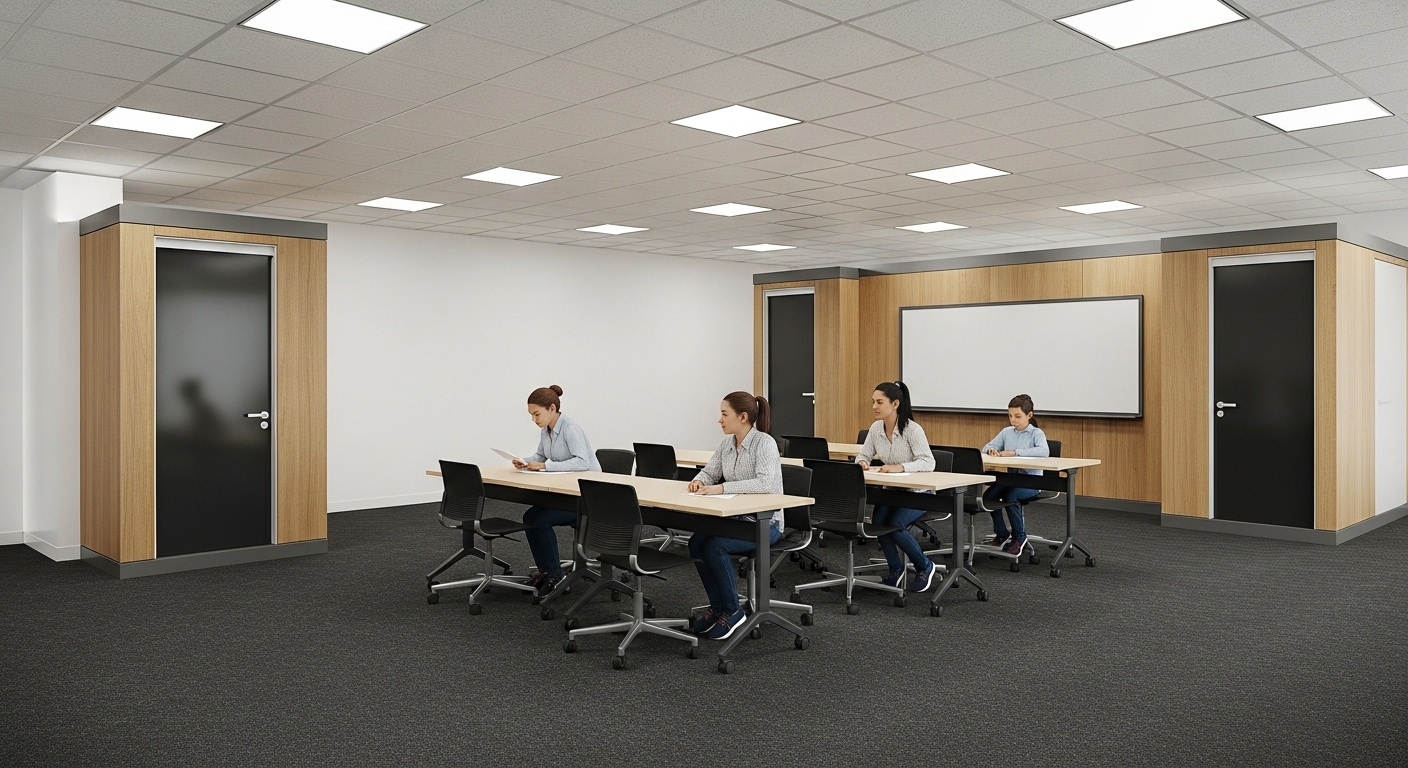
Modern portable classrooms provide schools with a practical solution to quickly increase usable space. These buildings offer flexibility, and they create innovative learning spaces that are adaptable to students’ needs. Here are a few ways portable units can enhance student learning:
Provide Timely and Temporary Solutions
Portable classrooms take a short time to construct, and they are prefabricated in a controlled environment that remains unaffected by factors such as weather-related delays. Transporting and installing the prefabricated units can also be done quickly. This enables schools to expand their usable space promptly and efficiently. By offering quick turnaround times, portable units allow schools to accommodate increasing student numbers with minimal disruption to class activities. Since these units are constructed off-site in a factory, they can be installed without causing significant interference to ongoing school operations.
These portable units also address short-term needs effectively. During renovations, portable classrooms provide a temporary solution for hosting students. They allow schools to maintain learning spaces without disrupting activities. In remote or underserved areas, these units serve as a viable option for establishing temporary campuses; this supports efforts to expand access to education. Other temporary uses for portable classrooms include:
- Modular spaces for extracurricular activities, such as tutoring or after-school programs.
- Specialized learning spaces, such as science labs or art rooms.
- Testing centers for standardized exams or assessment days when permanent facilities are unavailable.
Support Expansion and Adaptability Needs
Modular classrooms are easily expandable and adaptable to different educational needs. Schools increase usable space by incorporating additional modules. With this flexibility, schools can accommodate a growing student population without committing to long-term construction projects. This scalability helps to reduce overcrowding, facilitating smaller class sizes and allowing teachers to give more attention to students. By creating additional space, schools are able to manage the overflow from classrooms during peak times.
Portable classroom designs also support easy reconfiguration or repurposing to meet emerging school needs. Construction companies can incorporate features such as changing rooms, portable toilets, or showers. With this level of flexibility, schools are able to customize the layout to suit varying requirements; this includes the need for open study spaces, staff rooms, or libraries.
Schools can adjust the exterior finishes to blend with existing architecture. It is also possible to relocate modular structures to another location on the school grounds. This allows schools to optimize their investment; it lets them maximize the use of space and resources.
Provide Comfortable and Quiet Spaces
Modern portable classrooms support climate control and ventilation through the integration of advanced HVAC systems. These systems help create a comfortable environment for both teachers and students. By maintaining consistent temperatures and regulating humidity, HVAC systems enhance overall comfort and contribute to a productive learning atmosphere. Providing a comfortable space allows students to focus on their primary activities without unnecessary distractions. Some construction companies also incorporate high-quality insulation materials, and this may help reduce outside noise and promote a quiet, distraction-free environment.
Include Technology-Ready and Efficiency Features
Portable units incorporate high-speed internet access, interactive whiteboards, and audio-visual equipment. These elements enhance the overall learning experience by supporting digital learning and modern teaching methods. Modular units may also support energy efficiency using various features, including energy-efficient windows, insulation, and HVAC systems.
Create Engaging and Inclusive Spaces
Companies may create modular units with engaging indoor environments to boost student productivity. By integrating acoustics, customized lighting, and thoughtful spatial layouts, these units foster a positive and comfortable learning atmosphere. Some modular classrooms also feature large windows to maximize natural light, further enhancing the learning environment.
Portable units support accessibility for people with disabilities through thoughtful design modifications. These features include wheelchair ramps, specialized equipment, accessible restrooms, and wider doorways. Modular classrooms may also incorporate child-friendly features, such as non-toxic materials and rounded corners, to enhance safety. These design elements promote inclusivity; they allow staff and students with diverse needs to access the classroom comfortably.
Find a Portable Classrooms Provider
Portable units provide educational spaces that adapt to the evolving needs of schools. Construction companies build these classrooms to high standards, enhancing the longevity of the structures. Because they are durable, schools can use them for short-term needs or as a more permanent solution. Work with a reliable modular structure provider to customize your portable classroom and enhance student learning.
-

 Blog3 weeks ago
Simpcit6: Redefining Simplicity in a Complex World
-

 Technology5 months ago
YourAssistantLive com: The Future of Smart Digital Assistance
-

 food5 months ago
Calamariere: How to Perfectly Prepare at Home
-

 Blog5 months ago
Baddi Hub: An Emerging Industrial and Business Hotspot
-

 Health4 months ago
Nerovet AI Dentistry: Enhancing Patient Experience and Treatment Outcomes Dental Care
-

 Technology3 weeks ago
Voomixi com: The Digital Platform Redefining Online Interaction
-

 Crypto5 months ago
Crypto30x.com vs Other Crypto Sites – Best Bitcoin Tools?
-
 Technology4 months ago
Anonibs: The Trending Anonymous Image Board Platform